Table of Contents
Key takeaway: Crawl space encapsulation works when it is treated as a complete moisture-control system: water entry is corrected first, the ground is covered with a continuous sealed vapor retarder, foundation vents and air leaks are permanently closed and air-sealed, and the space receives properly designed mechanical humidity control. In many Triangle homes, insulating the foundation walls is also part of the best-practice approach for comfort and energy performance. A properly designed and maintained system is typically set up to keep crawl-space RH in roughly the 45–55% range, with the goal of staying consistently below 60%.
By late August, many Triangle homeowners who spent the summer running a dehumidifier, noticing a musty odor, seeing condensation on ducts, or feeling uneven indoor comfort have started looking into crawl space encapsulation. Search “does crawl space encapsulation work” and the results are a mixed bag: a few contractor guides, several YouTube explainers, and Reddit threads asking whether it is worth it or a scam. That mix reflects something real. Encapsulation is not one product, and the difference between a system that holds and one that does not comes down to what was actually done under the house.
What “Encapsulation” Actually Includes
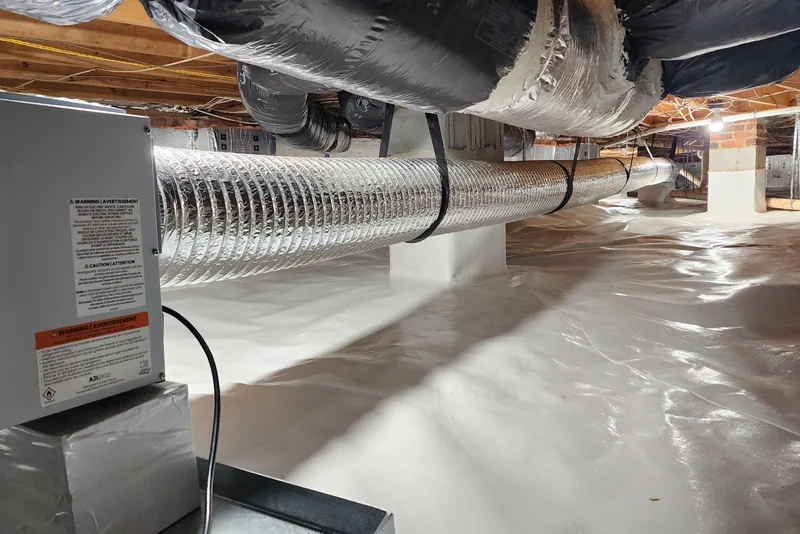
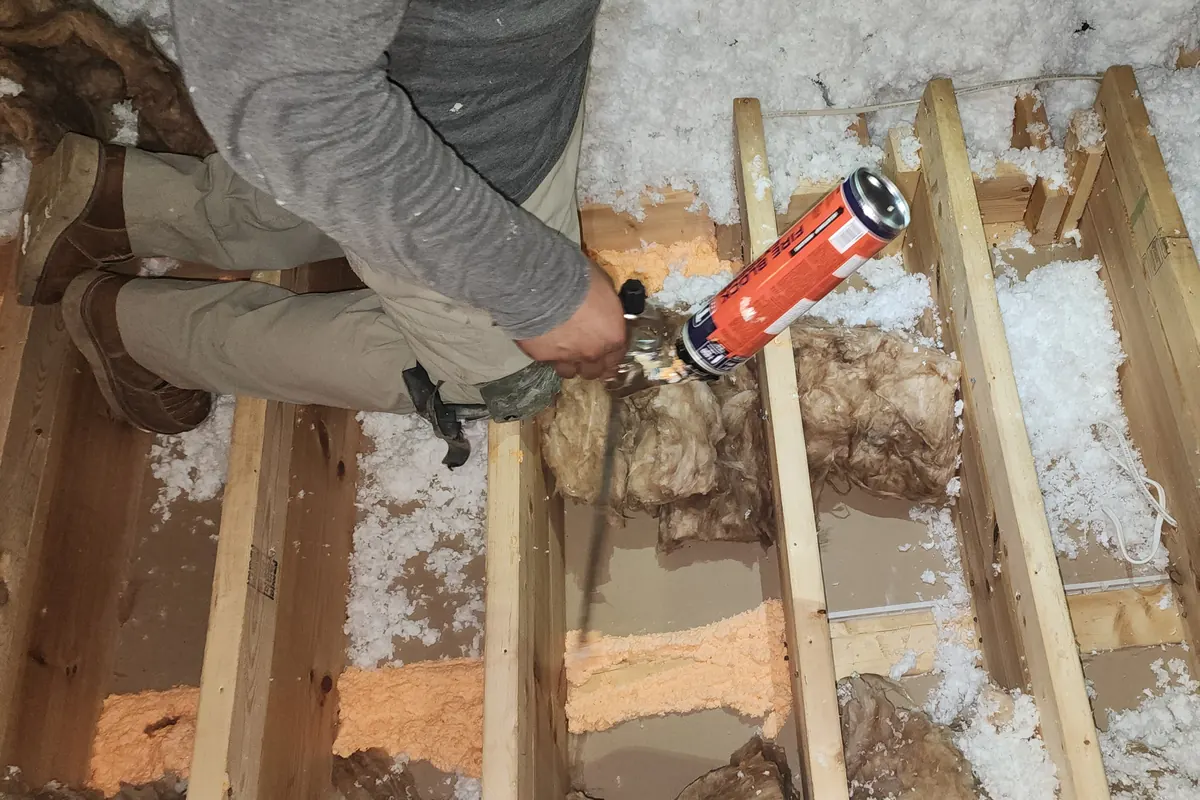
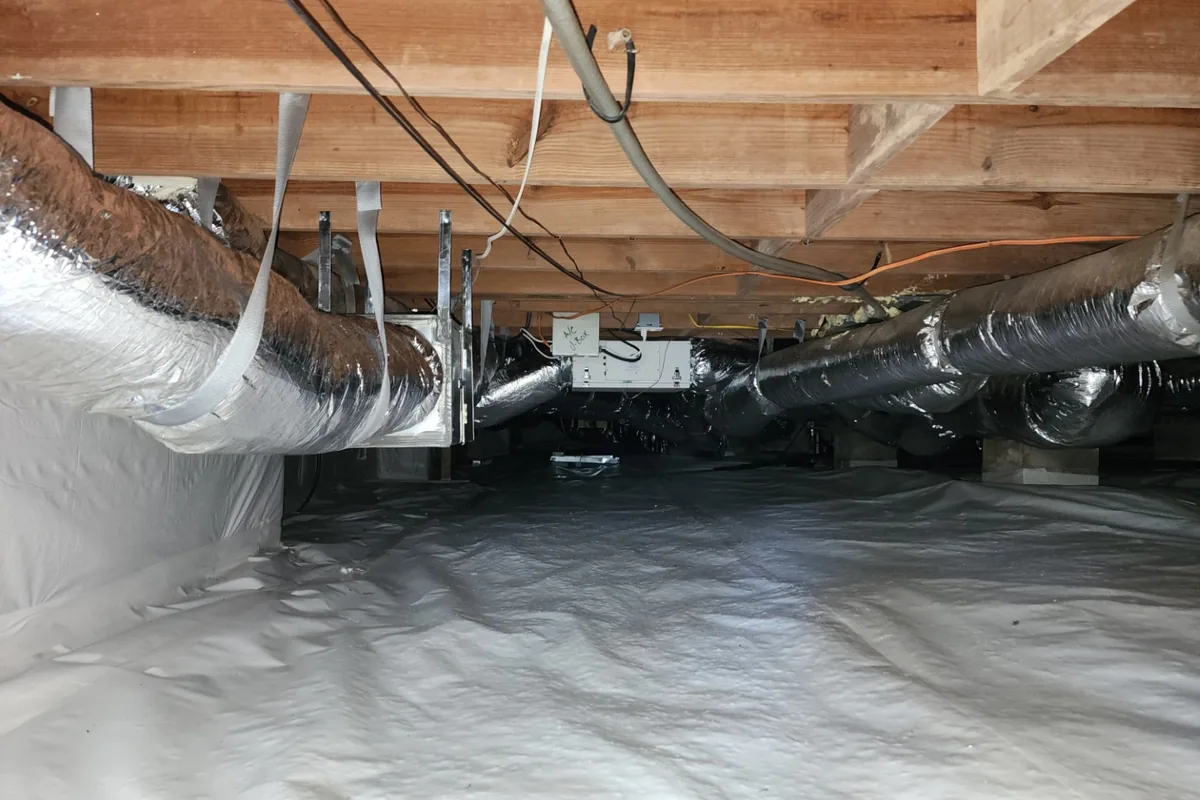
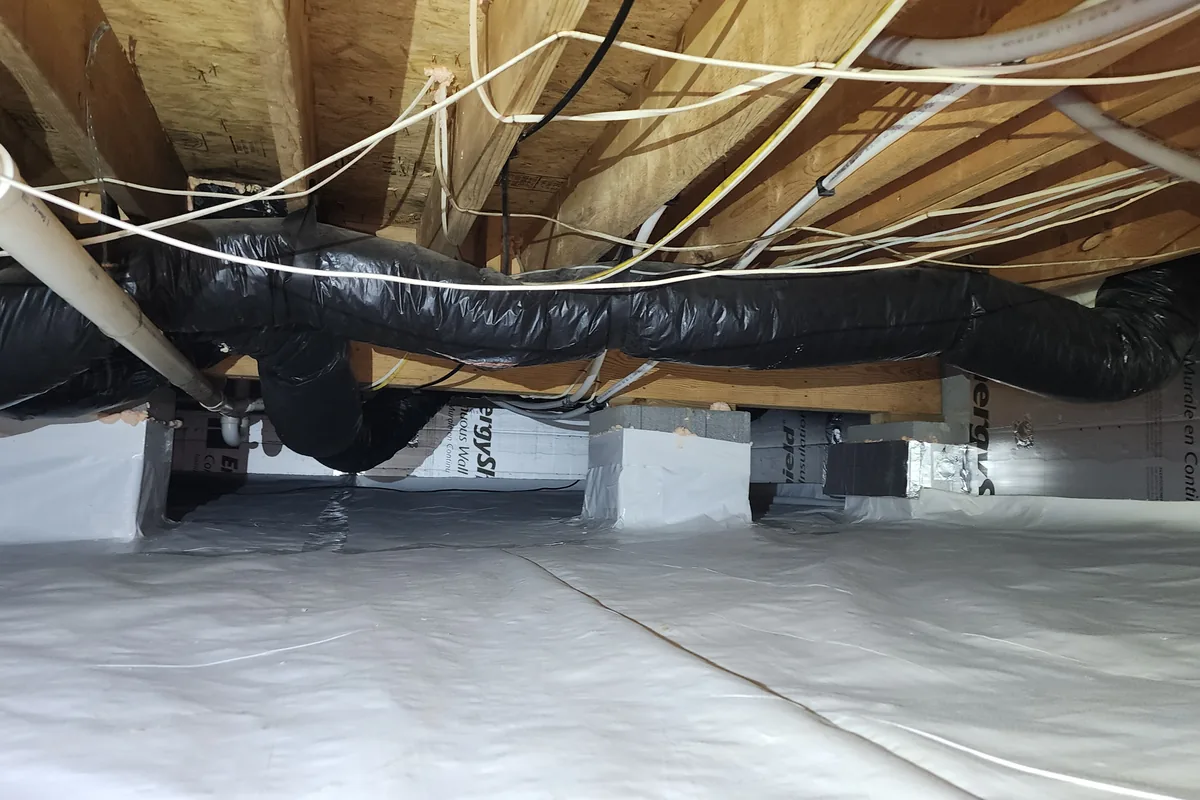
A crawl space encapsulation is best understood as a complete moisture-control system, not one liner rolled out over dirt. Water entry and drainage problems are corrected first, the ground and piers are covered with a continuous sealed vapor retarder, the foundation vents are permanently closed and air-sealed at the rim joist, and the space receives properly designed mechanical humidity control, commonly a dedicated dehumidifier. A full encapsulation from Peak Energy also typically includes R-10 foil-faced foam board insulation on the foundation walls. Foundation wall insulation is best practice for comfort and energy performance rather than a universal code requirement, and other code-compliant approaches exist industry-wide, but it is a standard part of Peak Energy’s own full-encapsulation scope. Skipping the water-management, vapor-retarder, air-sealing, or mechanical-drying pieces is what turns a full installation into a partial fix. None of this is a fringe approach in North Carolina: closed crawl spaces have been an accepted design in the state residential code since a 2004 revision, and Section R409 of the NC Residential Code sets out what a closed crawl space has to include.
This is why a vapor barrier alone, at an estimated $1,500–$4,000, is a different job than full encapsulation. Peak Energy’s vapor-barrier-alone service closes the foundation vents, but it does not air-seal the rim joist or insulate the walls the way full encapsulation does. A ground vapor barrier reduces moisture evaporating from soil, and closing the vents cuts down on the volume of outdoor air moving through the space, but humid outdoor air, which runs 70–90% relative humidity across the Triangle from May through September, can still work its way in through rim joist gaps and other unsealed penetrations, while uninsulated masonry walls can remain cool enough to contribute to condensation under some conditions. Whether a vapor barrier alone is enough depends on the moisture source, drainage, duct condition, and measured humidity in that specific home. It is not the same fix as a closed crawl space with mechanical humidity control, and treating the two as interchangeable is where a lot of the “does this even work” confusion starts. Our guide on what happens during an encapsulation job walks through the full installation step by step.
What a Properly Done Encapsulation Fixes
Properly designed and maintained, crawl space encapsulation is typically set up to keep a Triangle crawl space’s RH in roughly the 45–55% range, with the dehumidifier setpoint closer to 45–50% and the goal of staying consistently below 60%. That is the same target humidity level Peak Energy uses across its own installs. Keeping RH consistently below 60% reduces the moisture conditions that support mold growth and helps protect wood framing from prolonged dampness, though actual results depend on outdoor weather, drainage, foundation leakage, appliance operation, equipment sizing and setpoint, ducting, sensor location, and maintenance.
Getting into that range fixes the problems that come from a humid crawl space, not just the humidity number itself. A musty odor that becomes noticeable when the HVAC runs can be consistent with crawl-space air entering the home through floor penetrations, duct leakage, pressure differences, and seasonal stack effect, though the source should be diagnosed rather than assumed. Sealing the crawl space closes off that pathway when it is the cause. Wood framing and subfloor are no longer exposed to the sustained high humidity, condensation, and dampness that create conditions for mold growth and, when wood stays wet long enough, contribute to decay, and fiberglass insulation is no longer at risk of getting wet, compressed, fallen, or air-washed, conditions that can make it perform poorly and contribute to comfort and moisture problems. Most homeowners also see a real drop in heating and cooling costs since the HVAC system and any ductwork in the crawl space are no longer working against a wet, uncontrolled space underneath the house. The best local evidence comes from Advanced Energy, a Raleigh building-science nonprofit whose Department of Energy funded field study in Princeville, NC compared identical homes built on closed and wall-vented crawl spaces: the closed-crawl-space homes saved up to 15% on annual energy used for heating and cooling, and Advanced Energy’s later published work puts the range as high as 18%. The full write-up is in their guide, Closed Crawl Spaces: An Introduction to Design, Construction and Performance.
Where Encapsulation Falls Short or Fails
The skepticism in those Reddit threads is not baseless. Encapsulation fails or underdelivers in a handful of specific, recognizable ways.
The most common one is skipping proper water-entry and drainage correction before the vapor retarder goes in. A ground vapor retarder limits soil-moisture evaporation, but it does not replace grading, downspout control, exterior drainage, sump systems, or other water-management work when those are needed. It also does not stop liquid water that is actively entering the crawl space from grading, a gutter discharging too close to the foundation, or a high water table. A second cause is a cut-rate installation: thin plastic sheeting instead of a heavy vapor barrier, seams that were overlapped but never taped or sealed, and wall terminations that stop short of the top instead of running to the sill plate. Air and moisture find those gaps. A third is inadequate mechanical moisture control: skipping the dehumidifier, or using a unit that is improperly sized, installed, drained, or maintained, can leave the crawl space without adequate moisture-removal capacity. An undersized or poorly maintained unit runs constantly and still cannot keep up with an August crawl space. A fourth is covering the vents without permanently closing and air-sealing the rim joist and other penetrations around them, which leaves the space exchanging more outside air than it looks like from a glance at the vent covers. A less common but still real gap is skipping foundation wall insulation or leaving gaps in it. Foundation wall insulation can improve thermal performance and reduce the chance that cool masonry surfaces become condensation sites under humid conditions, though the need for it and the right insulation approach should be determined as part of the crawl-space design rather than assumed for every home.
None of these are reasons encapsulation “does not work” as a method. They are reasons a specific installation did not work, which is a different problem with a different fix. It is also why a homeowner comparing quotes should ask what happens to drainage, how seams are sealed, and how the dehumidifier is sized, not just what the vapor barrier costs.
What It Costs and How Long It Holds
A full crawl space encapsulation in the Triangle averages an estimated $7,500–$15,000, depending on the size of the crawl space and scope of work, including drainage corrections, dehumidifier selection, and existing moisture conditions. See our full encapsulation cost guide for a size-by-size breakdown.
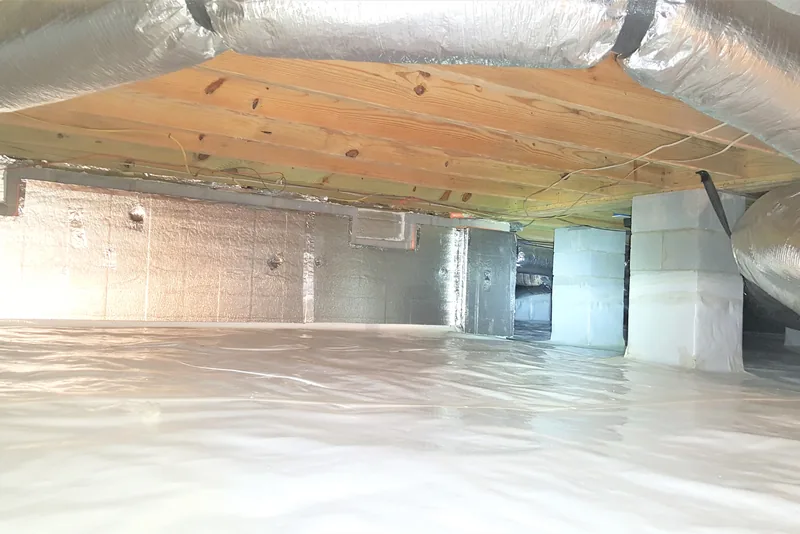
A well-built, well-maintained sealed crawl space can last the life of the house. The vapor retarder and wall treatment are not wear items, so their service life comes down to material quality, installation, water control, pest activity, and damage from traffic or later repairs. Inspect the crawl space periodically and repair tears, loose tape, or damaged terminations promptly. The dehumidifier is the part that wears out. A quality crawl-space unit can last up to about 10 years, depending on runtime, maintenance, and equipment quality, so plan on replacing it once or twice over the life of the encapsulation. Maintenance should include checking or cleaning the filter as specified by the manufacturer, confirming the drain or condensate pump is working, inspecting the unit and coil for dirt or ice, and verifying RH with an independent hygrometer. A crawl space that was properly encapsulated years ago and is still holding 45–55% RH today is usually one where that inspection and dehumidifier maintenance has actually happened, not one that was sealed and never looked at again.
Signs an Existing Encapsulation Isn’t Working
If a crawl space was already encapsulated, either by a previous owner or a past contractor, these signs point to one of the failure modes above rather than a working system:
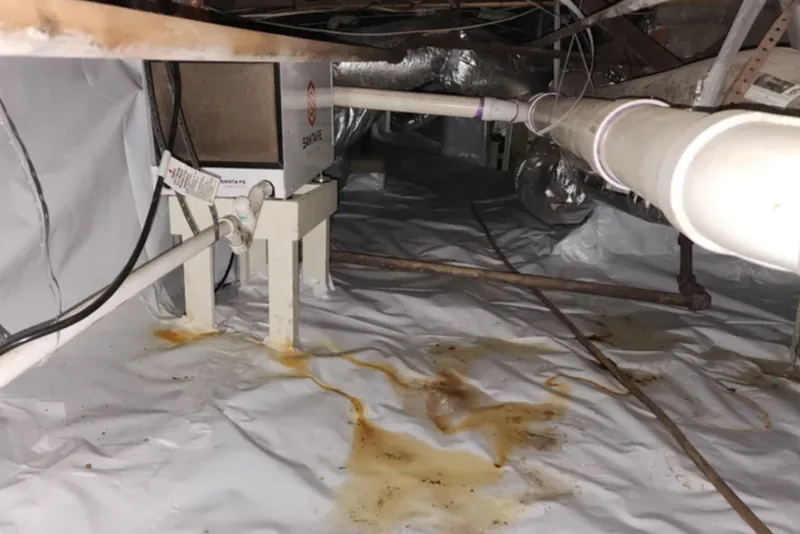
- A hygrometer in the crawl space reads above 55–60% RH even with the dehumidifier running
- The vapor barrier has visible gaps, torn seams, or areas where it does not reach the wall or a pier
- Water is pooling on top of or underneath the liner after rain
- A musty smell is still noticeable in the house above, especially when the HVAC runs
Any of these signs warrants an inspection, and a single serious one, like standing water, can be enough to act on. Multiple signs suggest the system may have a water-entry, air-sealing, vapor-retarder, or humidity-control problem that should be diagnosed before repairs are selected, rather than assumed to be a single failed component. Our signs your crawl space needs encapsulation guide covers the same signals from the other direction, for a crawl space that has never been sealed at all.
Frequently Asked Questions
Does crawl space encapsulation permanently eliminate humidity problems?
It can provide durable moisture control when water entry is corrected, the crawl space is properly sealed, and mechanical drying is installed and maintained. Humidity should still be monitored because equipment, drains, plumbing, and exterior drainage can change over time.
What makes a crawl space encapsulation fail or not work?
The most common causes are a liner installed over a drainage problem that was never corrected, seams and wall terminations that were not sealed, inadequate mechanical moisture control from a missing, undersized, or poorly maintained dehumidifier, and vents that were covered but not permanently closed and air-sealed at the rim joist. Skipping foundation wall insulation is a best-practice gap that can add to condensation risk, though it is not itself a moisture-control failure. Any of these can leave a crawl space humid even though a vapor barrier is visibly present.
Is crawl space encapsulation worth the cost?
It can be a worthwhile investment when the crawl space has recurring high humidity, soil moisture, duct condensation, musty odors, mold conditions, damaged insulation, or water-management problems. The right scope depends on an inspection: some homes need drainage correction or targeted repairs first, while others may not need full encapsulation. A full encapsulation averages an estimated $7,500–$15,000 depending on the size of the crawl space and scope of work. In Advanced Energy's North Carolina field research, homes on closed crawl spaces saved up to 15% on annual heating and cooling energy compared to vented homes, alongside the moisture control benefit.
How long does a crawl space encapsulation last?
A well-built, well-maintained sealed crawl space can last the life of the house. The vapor retarder, wall insulation, and permanently closed, air-sealed vents are not wear items, so their service life comes down to material quality, installation, water control, pest activity, and damage from traffic or later repairs, which is why periodic inspection matters. The dehumidifier is the part that wears out. A quality crawl-space unit can last up to about 10 years, depending on runtime, maintenance, and equipment quality, so plan on replacing it once or twice over the life of the encapsulation. Maintenance should include checking the filter, confirming the drain or condensate pump is working, inspecting the coil, and verifying RH with an independent hygrometer.
Find Out What Your Crawl Space Actually Needs
Wondering if encapsulation is the right call, or if a past install was done right?
Peak Energy, Inc. provides on-site crawl space assessments across Wake County and the Triangle. We evaluate relative humidity, vapor-retarder condition, drainage and water entry, vent closure and air sealing, insulation, and dehumidifier operation. Findings and recommended next steps are discussed with you on site.
Serving Holly Springs, Fuquay-Varina, Apex, Cary, Raleigh, Garner, and the broader Triangle region.