Table of Contents
Key takeaway: In a Triangle home with a vented crawl space, air can move into the living space through gaps in the floor system, duct leaks, and pressure differences created by weather and HVAC operation, not just the stack effect. That air can carry moisture, musty odors, and mold spores when mold is present. Sealing the crawl space and controlling its humidity is what actually improves the air you breathe upstairs, not air fresheners or a bigger HVAC filter.
The Triangle’s humidity has started to ease from its August peak, but by late September most crawl spaces are still holding the moisture they built up over the summer. As Triangle homeowners start closing windows and running the AC less, they notice something else instead: allergies that will not quit, a house that never quite feels fresh, dust that comes back almost as soon as it is wiped away. The cause is usually a few feet below their living room floor.
What’s Actually Moving From Your Crawl Space Into the Air You Breathe
A vented crawl space shares air with the house above it, whether anyone planned it that way or not. Air can move from a crawl space into the home through gaps in the floor system, duct leaks, and pressure differences created by weather and HVAC operation, and during cooler weather the stack effect can increase that upward movement. Whatever the crawl space air is carrying comes along for the ride.
Moisture, musty odors, and mold spores when mold is present can travel with that air. Elevated humidity in the crawl space can also raise indoor humidity enough to support dust mites where they actually live, in carpets, bedding, and upholstered furniture, rather than something that migrates up from the crawl space itself.
How Crawl Space Air Reaches the Rooms You Actually Live In
Building scientists call the classic version of this movement the stack effect: warm air escapes near the roofline, and the house pulls in replacement air from lower openings to balance the pressure. Stack effect is real, and it strengthens during heating weather when indoor air runs noticeably warmer than outside. But it is not automatically the dominant driver all year in the Triangle. In summer, a home can have weaker or even reversed pressures, and how much crawl space air actually reaches the living space depends just as much on duct leakage, HVAC operation, exhaust fans, wind, and the house’s overall pressure balance. For a full breakdown of how that mechanism works, see our post on what causes a musty smell in a Triangle home.
This pathway is strongest in homes where return ductwork runs through the crawl space, since a leaky return can pull that air directly into the HVAC system and distribute it through every room on the circuit. That is one reason two homes on the same street, with the same crawl space conditions, can have noticeably different indoor air, depending on duct sealing and how tight the floor assembly is above the crawl.
What’s Actually in That Air
Three things matter most inside that air.
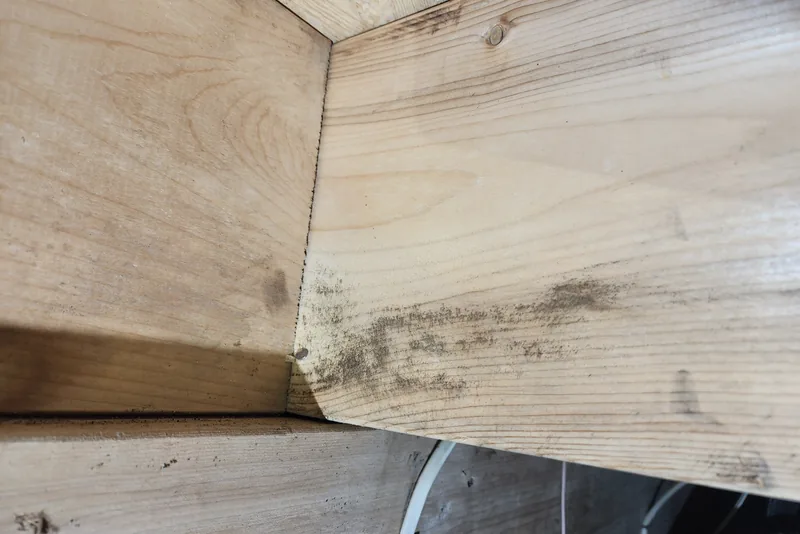
Mold and mildew spores. A vented crawl space in the Triangle regularly sees summer humidity of 70–90%, and Piedmont clay soil drains slowly enough to keep ground moisture feeding upward year round. Wood framing, subfloor, and sagging insulation batts give mold everything it needs to grow, and every colony releases spores into the air continuously, not just when it is disturbed.
Dust mites in the living space. Dust mites need a food source and moisture, and they live in dust reservoirs like carpets, bedding, and upholstered furniture, not in the crawl space itself. But when a vented crawl space keeps pushing excess moisture into the house, it can push indoor relative humidity above roughly 50%, the range where dust mites already living in those reservoirs thrive and multiply. Controlling the crawl space is one way to control the indoor humidity that feeds them.
Musty odors and mVOCs. Damp or mold-affected building materials can be associated with musty odors, including compounds sometimes called microbial volatile organic compounds (mVOCs). A musty smell is a useful sign to investigate moisture or microbial growth, but the odor alone does not identify a specific pollutant or confirm a health risk. For more on the smell specifically, see our post on what a musty smell in the house means.
None of this is something a stronger air filter fixes on its own. A filter can catch some particulates passing through the return, but it does nothing about the moisture feeding mold growth and dust mite populations in the first place, and it cannot filter the gas-phase compounds behind a musty odor at all. EPA’s guidance on mold and moisture control recommends keeping indoor relative humidity below 50%, the same range that controls both mold growth and the dust mite populations discussed above.
Signs Your Crawl Space Is Affecting Your Indoor Air
A few patterns are common in homes with crawl space moisture problems, though each one can also have other causes.
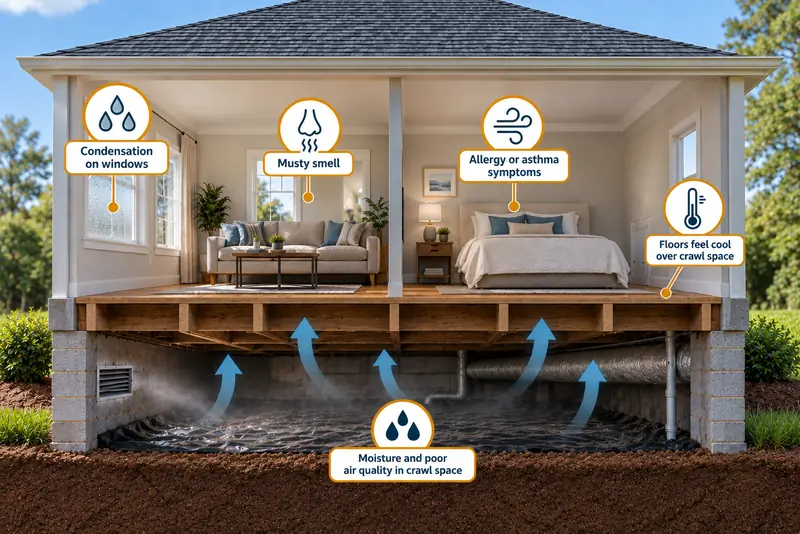
- Allergy or asthma symptoms that ease up noticeably when you are away from the house for a few days
- A musty smell that keeps returning no matter how much you clean or how many air fresheners you use
- Dust that builds back up within days of a thorough cleaning
- Condensation on windows or cool interior surfaces even when the thermostat is set normally
- Floors that feel cool or slightly tacky over rooms directly above the crawl space
These signs do not confirm that the crawl space is the source, but they are good reasons to inspect for moisture, musty odors, visible microbial growth, standing water, damaged vapor barriers, duct leaks, and air leaks between the crawl space and living area. Our post on ideal crawl space humidity levels covers what a healthy reading looks like if you want to check it yourself with a hygrometer.
How Peak Energy Addresses Crawl Space Air Quality
Peak Energy, Inc. is a building science and crawl space company in Holly Springs, NC, serving Wake County and the broader Triangle region. The approach that actually changes the air quality, rather than masking symptoms, follows a set order.
Measure first. A home energy audit includes a crawl space assessment along with blower door testing, so you know how much air is actually moving between the crawl space and the living area, not just whether the crawl space looks damp. An audit in the Triangle runs an estimated $475–$650+.
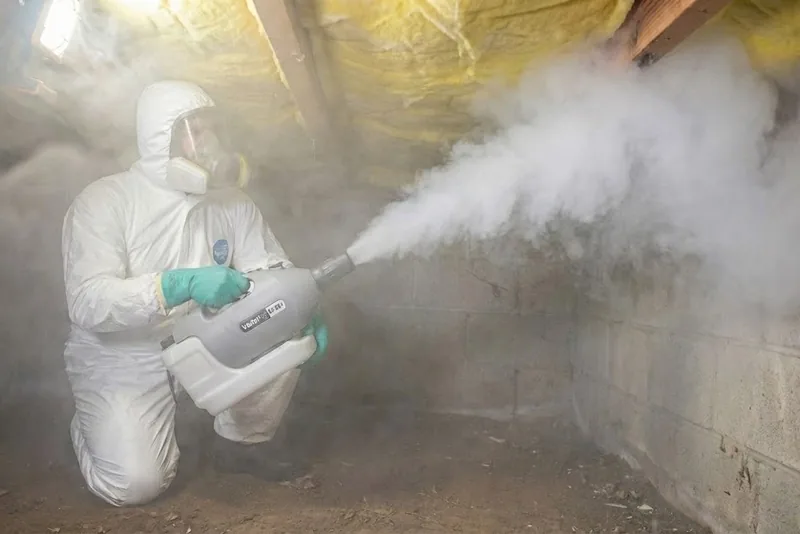
Treat existing mold, if present. Sealing a crawl space with active mold growth on the framing traps the problem rather than solving it. Mold remediation with EPA-registered antimicrobial treatments needs to happen before the crawl space is sealed, not after. More detail is in our guide to crawl space mold remediation.
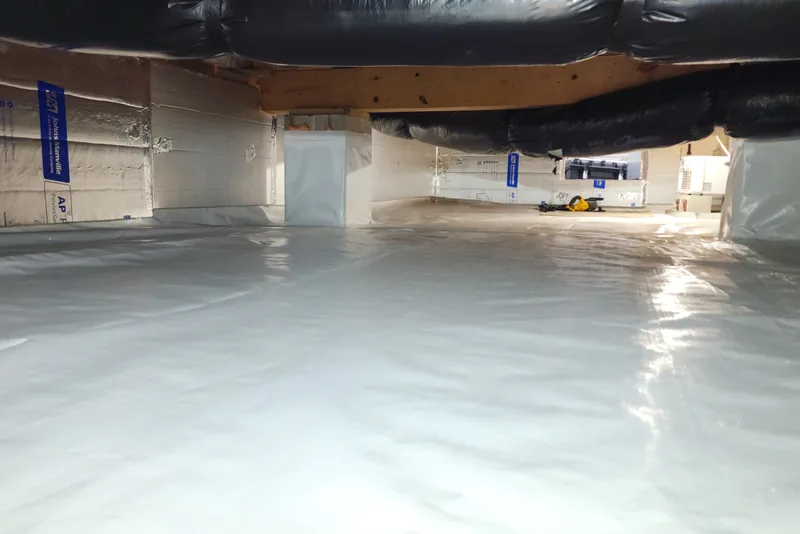
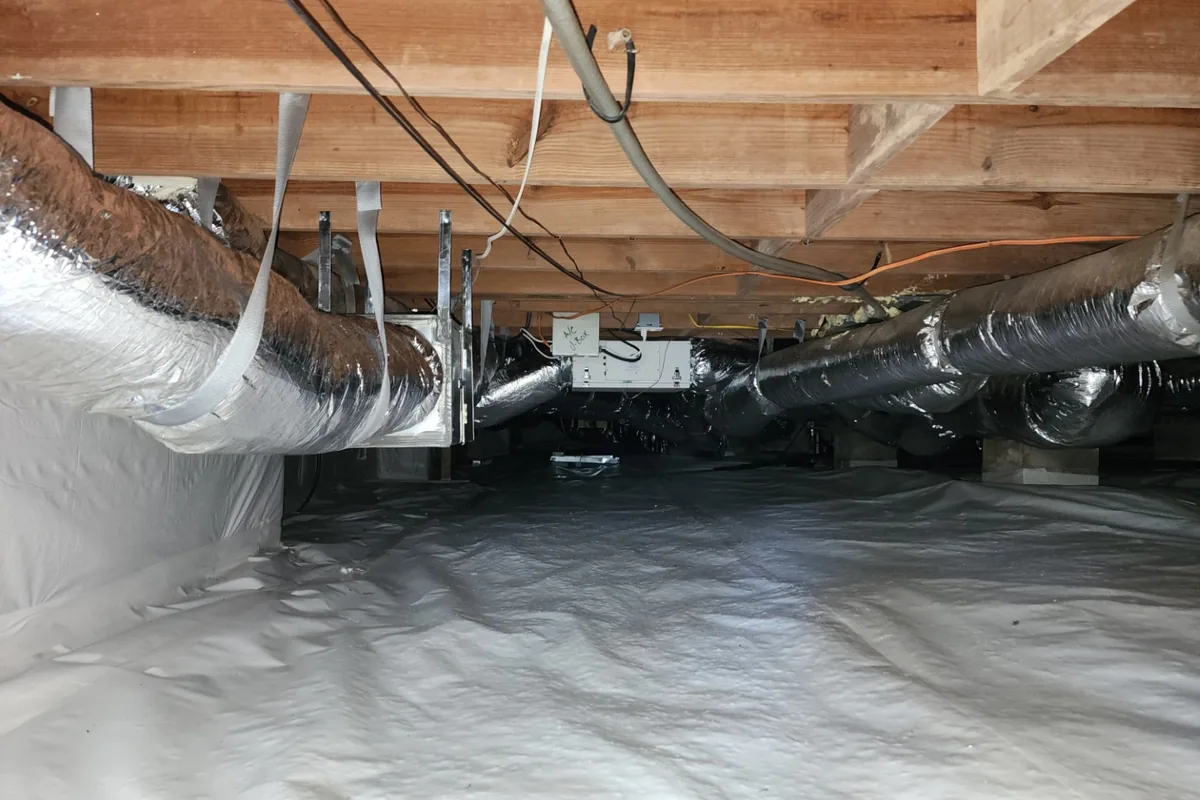
Seal the source with encapsulation. Crawl space encapsulation closes the foundation vents and lines the floor and walls with a heavy vapor barrier, cutting off the humid outdoor air that feeds mold and that otherwise raises indoor humidity into the range dust mites need. A full encapsulation averages an estimated $7,500–$15,000, depending on the size of the crawl space and scope of work.
Hold it dry with a dehumidifier. A right-sized crawl space dehumidifier keeps a sealed crawl space at 45–55% relative humidity year round, well below the threshold where mold can re-establish and low enough that it stops contributing to the indoor humidity dust mites need. Installation typically runs an estimated $3,000–$5,000.
Done in that order, there is less moisture and fewer particles available to move into the house through air leaks and duct pathways, whichever way the pressure balance runs that season.
Frequently Asked Questions
Can a crawl space really affect the air quality upstairs?
Yes. Most Triangle homes sit over a vented crawl space, and air can move from it into the living space through gaps in the floor system, duct leaks, and pressure differences created by weather and HVAC operation. Stack effect can increase that movement during cooler weather, but it is not the only driver. Moisture, musty odors, and mold spores when mold is present can travel with that air. The crawl space is not a sealed-off area separate from the rest of the house. It shares air with it.
What pollutants come from a crawl space?
The main concerns in a Triangle crawl space are mold and mildew spores from damp framing and musty odors linked to damp or mold-affected materials, sometimes called microbial VOCs. A damp crawl space can also raise indoor humidity enough to support dust mites, which live in carpets, bedding, and upholstery inside the home rather than in the crawl space itself. Odor alone does not confirm a specific pollutant or health risk, but it is a useful sign to investigate moisture or microbial growth.
How do I know if my crawl space is affecting my indoor air quality?
Watch for a musty smell that returns no matter how much you clean, dust that builds back up quickly, or condensation on windows and cool surfaces, though each of these can have other causes too. These signs do not confirm the crawl space is the source, but they are good reasons to inspect for moisture, musty odors, visible microbial growth, standing water, damaged vapor barriers, and air leaks between the crawl space and living area.
Does encapsulating a crawl space improve indoor air quality?
In most Triangle homes, yes. Encapsulation closes the foundation vents and lines the floor and walls with a vapor barrier, which stops humid outdoor air from entering and cuts off the moisture that mold depends on and that otherwise raises indoor humidity into the range dust mites need. Adding a crawl space dehumidifier holds the space at 45–55% relative humidity year round. Once the source is under control, there is less moisture and fewer particles available to move into the house through air leaks and duct pathways.
Not Sure What Your Crawl Space Is Putting Into Your Air?
Peak Energy provides crawl space assessments across Wake County and the Triangle. We'll tell you what we find and what, if anything, needs to be done about it.
Serving Holly Springs, Fuquay-Varina, Apex, Cary, Raleigh, Garner, and the broader Triangle region.