Table of Contents
Key takeaway: In most Triangle-area homes with a crawl space, a musty smell traces back to the crawl space, not the living areas you can see. Humid summer air enters through foundation vents, feeds mold and mildew on the framing and ductwork below, and rides warm air upward into the house through the stack effect. Sealing the crawl space and controlling its humidity removes the smell at the source.
By late July, the Piedmont is deep into its most humid stretch of the year, and it is the time of year Peak Energy, Inc. gets the most calls about a house that smells musty for no obvious reason. The carpets are clean, nothing is visibly wet, and the smell still will not go away. Most of the time, the cause is not in the room where you notice it.
Why a Musty Smell Most Often Starts Below the House
A musty smell is the smell of mold and mildew releasing microbial volatile organic compounds as they grow, and in a Triangle home that growth is usually happening in the crawl space. Most houses in Holly Springs, Apex, Cary, and Raleigh sit over a vented crawl space, and those foundation vents let in outdoor air that runs 70–90% relative humidity through the summer. When that humid air contacts cooler surfaces like ductwork and framing, moisture condenses on them, giving mold exactly what it needs. That smell then travels up into the house through gaps around plumbing lines and return ducts that pass through the crawl space.
That is the direct answer. The rest of this comes down to how the air actually moves, what is growing down there, and how to stop feeding it.
How Air Moves From the Crawl Space Into Your Living Room
Warm air rises. In a house, that means air inside the living space rises toward the attic and escapes through small gaps around the roofline, bathroom fans, and chimneys. As that air leaves the top of the house, it has to be replaced from somewhere, and the path of least resistance in most Triangle homes runs straight up from the crawl space through gaps around plumbing penetrations, the rim joist, and return ductwork. Building scientists call this the stack effect, and it is the same mechanism that pulls cold drafts into a house in winter. In summer the effect is weaker than in winter, but it is still present, and it is often reinforced by HVAC pressure imbalances that pull crawl space air into return ducts and duct leaks.
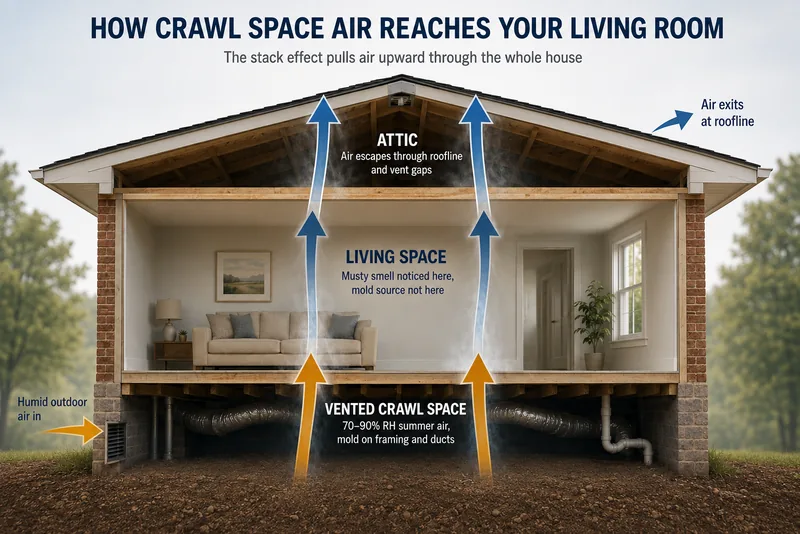
The rooms directly above the crawl space usually smell it first, but the effect is not limited to those rooms. Where return ducts run through the crawl space and are leaking or poorly sealed (a common setup in older Triangle homes), they can pull that air into the HVAC system and distribute it through the whole house, which is why a musty smell often seems to come from the air conditioner itself. For more on how that overlaps with humidity-driven AC problems, see our post on why your AC runs constantly in NC.
What’s Actually Growing Down There
Mold and mildew need three things to grow: a food source, oxygen, and surface moisture conditions typically associated with sustained relative humidity above roughly 60%. A vented Piedmont crawl space supplies all three without any help. The wood floor joists, subfloor, and rim joist are the food source. The soil underneath, especially the area’s slow-draining clay and 43–50 inches of annual rainfall, keeps ground moisture feeding upward into the space. Insulation batts sagging out of the joists hold that moisture against the wood even longer.
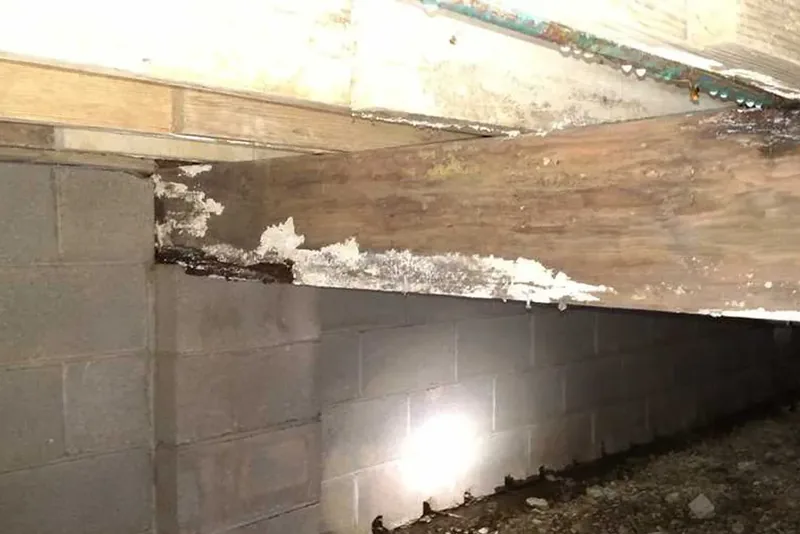
Ductwork running through the crawl space adds a second problem. Supply and return ducts carry cool, conditioned air, and in a hot, humid crawl space that cool metal surface collects condensation the same way a glass of ice water does on a summer porch. That condensation drips onto insulation and framing below it, which is often where a musty smell is strongest even though nothing looks obviously wet from a quick glance.
Musty Smell vs. Other Odors in the House
Not every bad smell in a house points to the crawl space, so it helps to rule out the obvious alternatives first. A rotten egg smell usually means sewer gas from a dry P-trap or a venting problem, not moisture. A sharp ammonia smell often points to pet urine in carpet padding. A smell that is worse specifically in one bathroom usually traces to a leaking wax ring or a failed exhaust fan in that room alone.
A true musty smell is different. It is earthy, damp, and usually strongest near the floor or when the HVAC system kicks on, and it tends to be present throughout most of the house rather than isolated to one room. If that description matches what you are smelling, the crawl space is the place to start looking. In some homes the source is elsewhere instead, an attic with roof leaks, a damp wall cavity, or an oversized HVAC system that cools the air without removing enough humidity, so a crawl space inspection that comes back clean is a reason to widen the search rather than assume the smell was imagined.
Signs the Smell Is Coming From Your Crawl Space
A few patterns point clearly to the crawl space as the source. If two or more of these sound familiar, it is worth a closer look:
- The smell is strongest near the floor or gets stronger when the AC or heat runs
- Floors feel slightly cool or tacky even when the thermostat reads a comfortable temperature
- A hygrometer placed near the floor reads above 60% relative humidity
- You can see foundation vents that are open to the outside from underneath the house
- The smell has been there for months and cleaning or air fresheners have not fixed it
If you crawl into the space yourself, look for white or gray fuzzy growth on the wood, dark staining on the subfloor, or standing water near the vents. Not every homeowner is comfortable doing that inspection, and that is reasonable given how tight and low most Triangle crawl spaces are.
How to Get Rid of a Musty Smell for Good
Peak Energy, Inc. is a building science and crawl space company in Holly Springs, NC, serving Wake County and the broader Triangle region. The approach that actually removes a musty smell, rather than masking it, follows three to four steps.
Measure first. A home energy audit includes a crawl space assessment along with blower door testing and duct leakage testing, so you know exactly how much outdoor air is getting in and where. An audit in the Triangle runs an estimated $475–$650+. Guessing at the source before measuring often means fixing the wrong thing.
Mold treatment (if needed). For homes where mold is already visible on the joists or subfloor, a dedicated crawl space mold treatment is often the next step. Our sister company, Triangle Dehumidifiers, handles mold treatment using EPA‑registered products after the moisture source is addressed. Learn more about their crawl space mold treatment process.
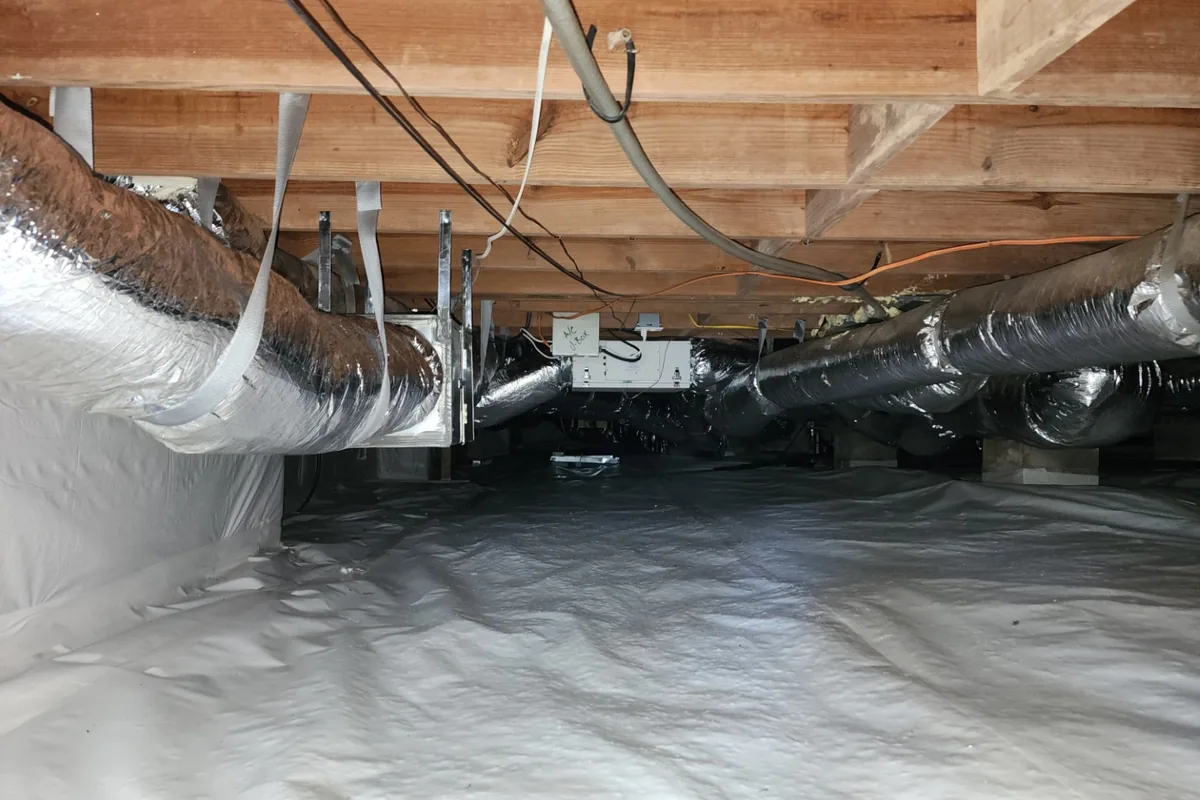
Seal the source. Crawl space encapsulation closes the foundation vents and lines the floor and walls with a heavy vapor barrier, which stops humid outdoor air from entering in the first place. A full encapsulation averages an estimated $7,500–$15,000, depending on the size of the crawl space and scope of work, including drainage and existing moisture conditions. Where a full encapsulation is not the right fit yet, a vapor barrier alone covers the ground moisture at a lower cost, though it does not seal the vents the way full encapsulation does.
Add dedicated humidity control. Once the crawl space is sealed, a right-sized crawl space dehumidifier holds the space at 45–55% relative humidity year round, which takes away the moisture mold and mildew need to keep growing. Installation typically runs an estimated $3,000–$5,000. If mold has already taken hold on the framing, that growth may need direct treatment before or alongside encapsulation. Our guide on crawl space mold remediation covers what that process looks like.
Done in that order, the crawl space stops feeding the smell. The musty odor that kept coming back on its own often improves within days and continues to diminish as materials in the crawl space and framing finish drying out.
Frequently Asked Questions
Why does my house smell musty even though it's clean?
A musty smell is not a cleanliness problem. It is the smell of mold and mildew growing somewhere air-conditioned rooms cannot reach, most often the crawl space under the house. You can vacuum, mop, and run air freshener every day and the smell will keep coming back, because the source is below the living space, not in it. The fix is to find where humid air is entering, not to clean harder.
Where does the musty smell in a house usually come from?
In Wake County and the rest of the Triangle, most homes sit over a vented crawl space, and that is the most common source. Outdoor humidity of 70–90% during the summer enters through the foundation vents, sits on damp Piedmont clay soil, and works its way up into the house through the stack effect. Basements, attics, and poorly ventilated bathrooms can also carry a musty smell, but a crawl space is the first place to check in a Triangle home.
Can a musty smell mean mold, even if I don't see any?
Yes. The musty smell itself is caused by microbial volatile organic compounds, gases given off by mold and mildew as they grow. You can smell active mold growth well before it is visible, especially if it is growing on the underside of a subfloor or on floor joists in a crawl space you rarely enter. If the smell is present but you cannot find visible mold, the growth is most likely somewhere out of sight, and a crawl space inspection is the next step.
Will encapsulating my crawl space get rid of the musty smell?
In most Triangle homes, yes, because encapsulation removes the source rather than covering it up. Sealing the foundation vents, lining the floor and walls with a vapor barrier, and adding a crawl space dehumidifier stops humid outdoor air from entering and holds the space at 45–55% relative humidity. Once the crawl space stays dry, mold and mildew lose the moisture they need to grow, and the musty smell has nothing left to feed it. Existing mold on wood surfaces may need treatment first if it has already taken hold.
Tracked the Smell to Your Crawl Space?
Peak Energy provides crawl space assessments across Wake County and the Triangle. We'll tell you what we find and what, if anything, needs to be done to stop it.
Serving Holly Springs, Fuquay-Varina, Apex, Cary, Raleigh, Garner, and the broader Triangle region.