Home Energy Audits in Holly Springs & the Triangle
Blower door testing, thermal imaging, and airflow measurement show where your home leaks air, loses heat, and pulls in humidity. You get the numbers and the fix list before you spend a dollar on upgrades.
What Is a Home Energy Audit?
A home energy audit is a measured test of how your home uses energy and where it loses it. You will also hear it called a home energy assessment or an energy efficiency audit, and they all mean the same thing. We run a blower door, a thermal camera, and a duct blaster to put real numbers on air leakage, insulation performance, duct loss, and HVAC airflow, so the recommendations come from data instead of a guess made from the driveway.Most people call us about comfort before they call us about bills. A bonus room that never cools. A back bedroom that stays cold all winter. Humidity that never feels right no matter where the thermostat sits.
Indoor air quality is the other reason the phone rings. When return ducts leak or the building envelope is open to the crawl space, attic, or garage, the HVAC system pulls in unconditioned air along with everything in it: humidity, dust, mold spores, and the musty smell that shows up every July in Wake County. Homeowners describe it as dust they can never stay ahead of, allergies that are worse inside than out, or a house that smells like the crawl space. Those are duct and envelope problems, and testing is how you find them. Our guide to crawl space air quality in Triangle homes follows the path that air takes upstairs.
Homes in Wake County built in the 1990s and 2000s waste more energy than their owners think, and the causes repeat from house to house.
Common Problems We Find
- Under-insulated attics. Depth that was marginal the day it was installed and has settled since.
- Leaky ductwork. Conditioned air dumped into the attic or crawl space instead of the rooms, and unconditioned air pulled back in through the returns.
- Vented crawl spaces. Damp summer air drawn up through the floor all season, which drives both the humidity and the air quality complaints.
- Air leaks at penetrations. Plumbing stacks, wiring holes, recessed lights, top plates, and the open cavity behind a tub or shower on an exterior wall.
- HVAC air handler airflow that is wrong for the house. Blower speed, static pressure, and equipment settings left wherever the installer defaulted to, so the system moves too little air, runs longer than it should, and never delivers the performance it was sold on.
If your bills keep climbing without an obvious explanation, our guide to why energy bills are so high in NC breaks down the usual causes.
How Do You Know If You Need a Home Energy Audit?
- High energy bills. Especially bills that keep climbing with no change in how you live.
- Uneven temperatures. Rooms that are always too hot in summer or too cold in winter.
- HVAC that never shuts off. The system runs long cycles because the house cannot hold the air it just paid to condition.
- Drafts at windows, outlets, and baseboards. Air leaks are pulling outside air into the rooms you live in.
- Dust, odors, and allergy symptoms indoors. Musty smells, dust that is back a day after cleaning, or allergies that get worse when you walk in the door usually trace to leaky ducts or a crawl space that is open to the house.
- Humidity that will not come down. Condensation on windows, sticky rooms in summer, or a damp feeling the thermostat cannot fix.
- An older home nobody has ever tested. Homes built before 2010 rarely meet current NC energy code for air leakage or duct leakage.
If two or more of those describe your house, an audit will find the root cause and tell you which fix to do first.
Heading into fall and winter. The summer humidity is behind us, and the same leaks that pulled damp air in during July are the ones you will feel as cold drafts in January. This is the season to seal them and to get attic insulation back up where it belongs. Cold weather also makes the testing sharper. The wider the gap between the temperature inside and outside, the more plainly the thermal camera shows heat leaving the house and cold air pushing in.
What a Home Energy Audit Includes
A walkthrough by itself will not tell you much. We bring the equipment that measures what is going on inside your walls, attic, crawl space, and ductwork. HVAC contractors and code inspectors hire us for the same testing. We also build the audit around your house and the problems you called about instead of running a fixed checklist. For a step by step look at the visit, see what happens during a home energy audit.
Blower Door Testing
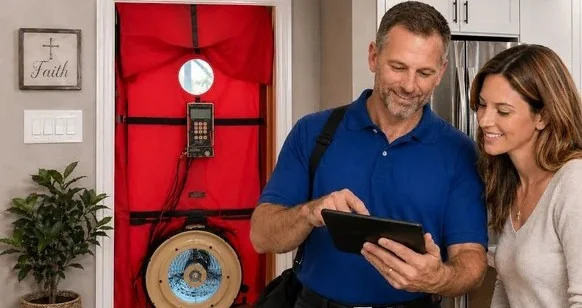
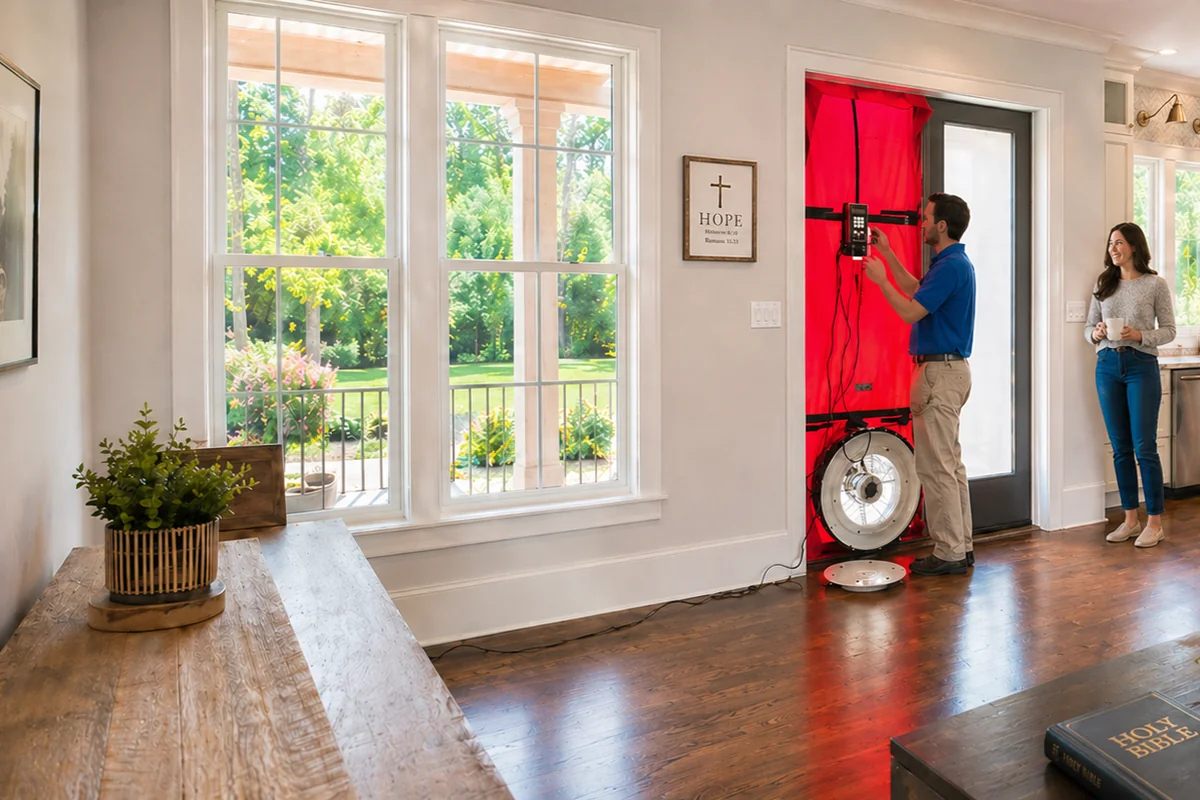
A calibrated fan mounted in your front door pulls the house to negative pressure and measures how much air leaks through the building envelope. We offer blower door testing as a standalone service too, most often for builders and HVAC contractors who need a code number. The result is a CFM50 number, meaning cubic feet per minute of leakage at 50 pascals. From there we calculate ACH50 (air changes per hour) and compare your house against code. NC code for new construction is ≤5 ACH50, and older Wake County homes often test at two or three times that. While the blower door fan is running, we can typically feel and see with a thermal camera which holes and cracks are leaking air into the home.
Thermal Imaging
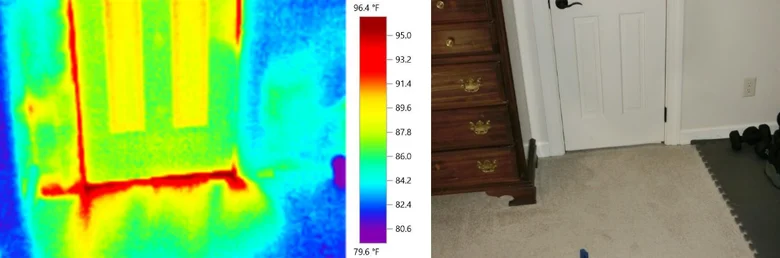
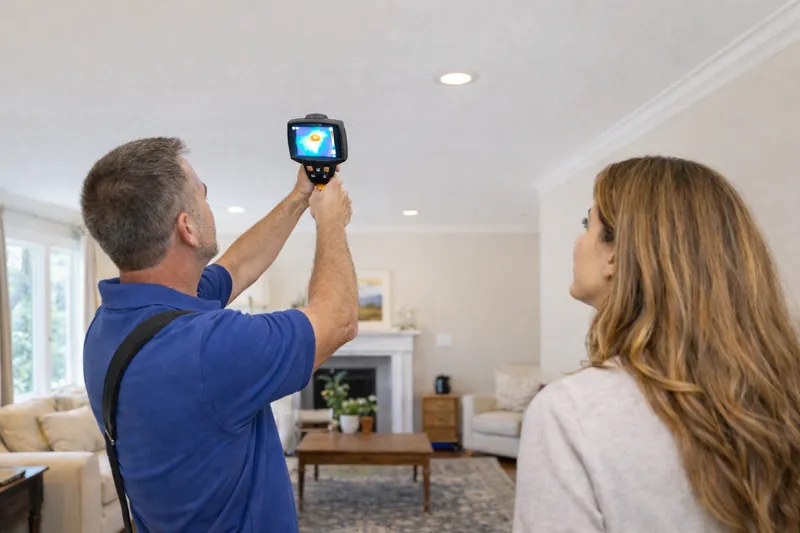
With the blower door running, we scan walls, ceilings, and floors with an infrared camera. Cold spots and streaking show where insulation is missing, thin, or getting washed out by air moving through it. It is the only way to see a problem buried inside a finished wall without opening it up.
Thermal imaging works best when there is about a 20 degree difference between the temperature inside the house and the temperature outside. The more the temperature differential, the more clearly missing insulation or an air leak separates itself from the wall around it. Cold winter mornings and hot summer afternoons give us the sharpest images. If the weather is mild the day we test, we will try to tell you what the camera can and cannot show you rather than read too much into a faint image.
Duct Leakage Testing
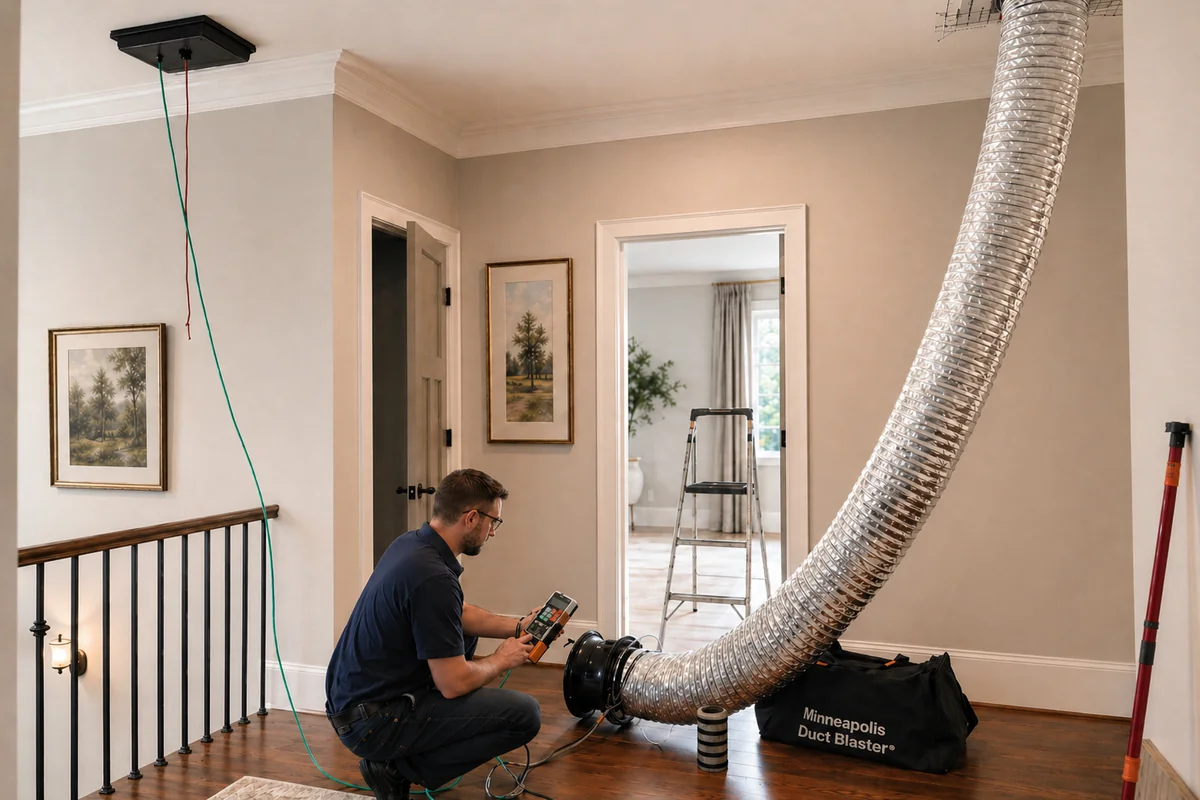
Using a duct blaster, we depressurize the HVAC system to -25 Pa and measure the air moving through every hole in the ductwork. This is the same duct leakage testing we run for contractors on new construction. That number covers both sides of the system: conditioned air escaping the supply side before it ever reaches a room, and dirty, unconditioned air being pulled into the returns from the crawl space, attic, or garage. The test does not separate supply from return. It combines them into one total CFM at that test pressure.
Leaky ducts are one of the biggest energy wasters in Triangle homes, and plenty of systems lose 20 percent or more of their airflow at connections, boots, and the air handler cabinet. Return-side leakage costs you energy and can pull crawl space and/or attic air straight into what your family breathes. NC code for duct leakage to the outside is ≤4 CFM25 per 100 square feet of conditioned floor area, and our breakdown of duct leakage test results explains what your number means. Duct leakage testing is typically an add-on to the basic audit starting at $250 per system.
HVAC Airflow Testing
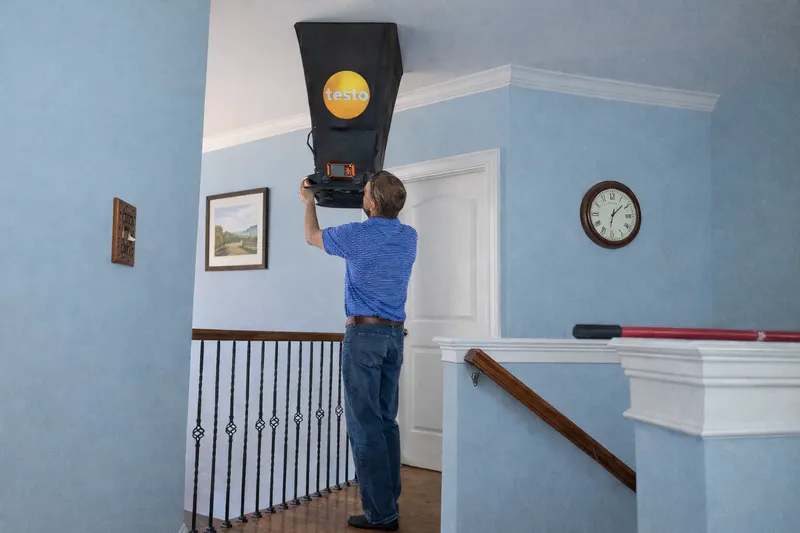
We measure supply, return, and exhaust airflow at the registers with a flow hood and check what the air handler is actually delivering against what the air handler should be set up for. We test static pressures of the HVAC duct system at the correct supply and return locations. We check equipment and thermostat settings for airflow. This is where we find rooms starved for air, returns too small to feed the system, blower speed and equipment settings still sitting in the default position where the manufacturer built it, pressure imbalances that pull air up from the crawl space or down from the attic, and bath fans too weak to meet code. Correct airflow is the difference between equipment that performs the way the label says and equipment that never reaches temperature and/or humidity set point.
Do not assume your HVAC contractor has this dialed in. Setting the dip switches, setting the airflows, testing static pressure at the right locations, and configuring the thermostat are all part of a correct installation, and in our experience very few technicians have been trained to do them. Most systems go in at factory default and nobody looks again. On the service call the refrigerant gets checked, everything looks good, and you are left with the same problem you called about. We see hundreds of these units every year and the damage they cause in homes.
Improper airflow is also a major contributor to humidity problems in homes. Moisture removal happens at the coil, and it depends on how much air is moving across it. Push more air than the system was set up for and the coil runs warmer and pulls far less water out of the air, so the house reaches the temperature you set and still feels damp. Plenty of humidity complaints we get called about turn out to be an airflow problem rather than a dehumidifier problem.
Airflow testing earns its keep when you have temperature imbalances between rooms or between floors, humidity that will not come down, or pressure differences that point back to unbalanced airflow. It is an add-on to the basic audit starting at $200 per system, and we also offer HVAC airflow testing on its own.
Attic and Crawl Space Inspection
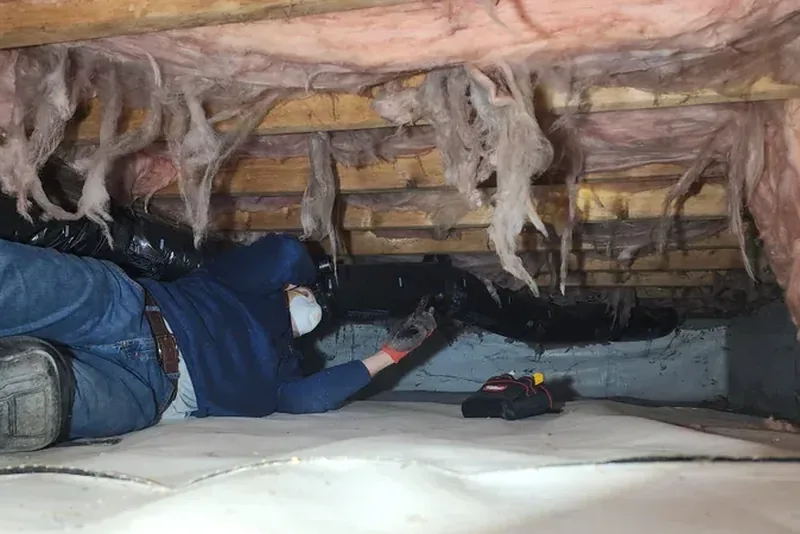
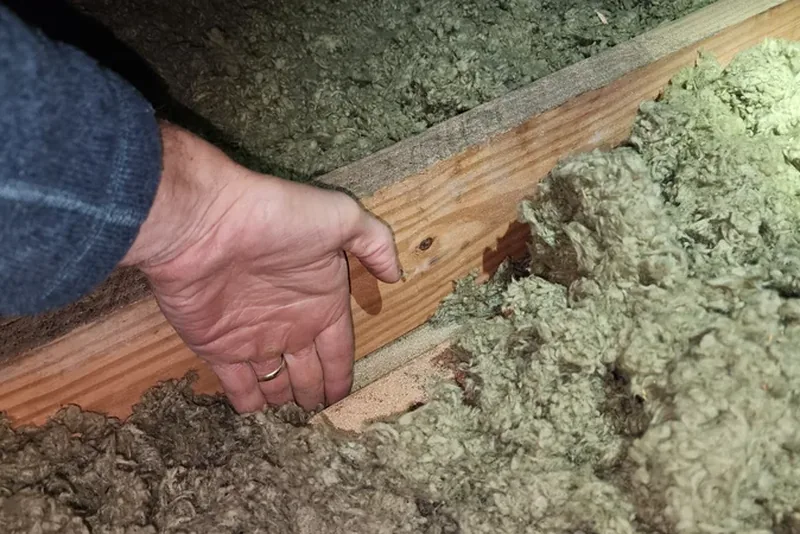
We get into the attic and crawl space in person. We measure insulation depth and work out the R-value you actually have against what the code called for when the house was built, look for moisture damage, check vapor barriers, and flag pest or mold issues. This is where the recommendations come from for attic insulation upgrades, crawl space encapsulation, or dehumidifier installation.
Walk-Through Discussion
We explain what we find as we find it and walk the house with you. Take notes, take pictures, ask questions. By the time we leave, our aim is that you know what is wrong with your home and what order to take it on. There is no report to wait on.
We will also be straight with you about the limits of that. Depending on how a house was built and what has been done to it since, there are times we cannot name the one exact cause of a leak or an indoor air quality problem. We were not standing there the day the house was framed, insulated, and closed up, and no instrument recovers that history in full.
What we can do is narrow it down when we cannot pinpoint the exact problem. Years of inspecting newly built homes and years of testing them, read together with thermal imaging and blower door results, point us to the causes that repeat in houses like yours. That is the whole value of the diagnostics: you find out where your thermal boundary and your air barrier stop lining up without pulling the drywall off your walls to go looking. From there we recommend the fixes that are feasible and cost-effective for your house, and we tell you plainly when we are giving you our best read rather than a certainty.
What Happens After the Audit

The visit does not end with a list of problems handed over at the door. We help you sort out what to do first, what type of contractor to call for it, and what to ask them when they bid the work.
Some of it we handle ourselves. Crawl space encapsulation, dehumidifier installation, and energy monitoring are our own work. We can also provide other improvements like duct sealing or attic insulation, or point you toward the right contractor and help you understand what the work should actually involve, so you can read the quote you get back.
You should finish the visit knowing your house better than you did that morning, with a plan you can work through in order.
Some Houses Take More Than One Pass
Not every problem gives itself up on the first visit. Some homes were built in ways that make the cause hard to isolate: complicated rooflines, cantilevered floors, bonus rooms over garages, additions tied into the original structure, and chases and soffits that connect parts of the house that were never meant to be connected. In a home like that, landing on the right solution can be a process. We test, we treat the most likely cause, and sometimes we come back and test again to confirm the house responded the way we expected it to.
That process works, and it costs far less than guessing and rebuilding twice. It does ask something of you. You have to be willing to take it a step at a time and to understand why each step comes in the order it does. If what you want is one visit that makes every symptom disappear at once with a guarantee attached, this is not that, and we would rather say so now than take your money and leave you disappointed.
There are also homes where the design itself is the limit. When the thermal boundary and the air barrier were never continuous to begin with, or the HVAC system was never properly designed or installed, the honest answer is sometimes that remodeling or rebuilding with a builder who knows advanced building techniques will get you a guaranteed result that retrofitting a finished house cannot. Builder-grade equipment is part of that picture. It is cheap up front and very limited in what it can do, and no amount of adjustment turns a system that was undersized or poorly laid out into one that holds temperature and humidity the way you want it to. We will tell you when we think you are in that territory. Knowing it before you spend money on partial fixes is worth the price of the audit on its own.
How Much Does a Home Energy Audit Cost?
| Service | Typical Price |
|---|---|
| Basic audit (blower door + thermal imaging + walk-through) | $475–$650+ |
| Duct leakage testing | From $250 per HVAC system |
| HVAC airflow testing (flow hood) | From $200 per HVAC system |
| Complete HVAC design and analysis | $500+ |
| Duration | 2–4 hours on-site |
Those are our typical rates. Final cost depends on the size of the house and how much testing it needs.
The audit is a standalone diagnostic service and the fee is not credited toward later improvement work. What you get for it is knowing where your money should go, and what it should buy you, before anyone starts a job.
Peak Energy is an approved Duke Energy Smart $aver participating contractor. If the audit identifies attic work, Duke Energy pays $700 on qualifying attic insulation combined with air sealing, and $350 on stand-alone duct sealing. There are no income limits. Both rebates are paid on measured leakage reductions, and the blower door and duct leakage numbers from your audit are the same measurements those rebates are scored against.
See the Smart $aver rebate details. For income-qualified households, the state's Energy Saver NC program covers a broader set of measures and a much larger share of project cost, and the two programs stack on the same project.
Home Energy Audits Across the Triangle
We perform professional home energy audits throughout Wake County and the surrounding Triangle. We are based in Holly Springs, and most audits get scheduled within 7 to 10 days.
Frequently Asked Questions
How much does a home energy audit cost in the Raleigh area?
A basic energy audit in the Triangle is estimated at $475–$650+ depending on your location and the size and layout of the home. Additional testing is priced separately: duct leakage testing starts at $250 per HVAC system and HVAC airflow testing starts at $200 per HVAC system. Pricing can vary based on the size of your home and what you need.
How long does a home energy audit take?
A full audit takes 2–4 hours for a typical Wake County home. This includes blower door testing, thermal imaging, duct leakage testing, and a walkthrough of the attic, crawl space, and HVAC system. Larger homes or complex systems may take longer.
What does a home energy audit include?
A standard Peak Energy audit includes a blower door test, thermal imaging, an attic and crawl space inspection, and a walk-through of the findings with you while we are still in the house. Duct leakage testing and HVAC airflow testing are available as add-ons.
Is a home energy audit worth it?
For most homeowners the biggest payoff is comfort. Fix the real problems and rooms hold the temperature you set, drafts go away, and the room that always ran hot or cold finally matches the rest of the house. Air quality improves too, because the same leaks that waste energy are pulling humidity and dust in from the crawl space and attic. Lower bills come with it. The audit tells you where to spend first instead of guessing.
Can a home energy audit help with indoor air quality?
Often, yes. Leaky return ducts and gaps in the building envelope pull unconditioned air into the house from the crawl space, attic, and garage, and that air brings humidity, dust, mold spores, and odors with it. Blower door and duct leakage testing show where that air is coming from, which is where any real fix for musty smells, heavy dust, or humidity that will not come down has to start.
Do I need to be home during the energy audit?
Yes. We need access to the thermostat, HVAC system, attic, crawl space, and every room. The blower door test needs all exterior doors and windows closed. We walk the findings with you at the end so you know the results and the next steps.
Start With Comfort. Save on Energy Too.
A home energy audit tells you why your home feels the way it does and what it will take to fix it. Better comfort, cleaner air, and lower bills all start with testing instead of guessing. Serving Holly Springs, Raleigh, Cary, Apex, Fuquay-Varina, Garner, and the Triangle.
Schedule Your AuditOr call (919) 567-5329