Table of Contents
Key takeaway: A duct blaster test measures leakage from the duct system alone, in CFM25 per 100 square feet, not whole-house air leakage. NC code requires it on newly installed residential duct systems, with exceptions for ducts inside conditioned space, partial systems added during a renovation, and complete systems serving 750 sq ft or less (5.0 CFM25/100sf total, 4.0 CFM25/100sf to the outside, per 2018 NCECC Section R403.3.3). Existing-home owners typically add it to a home energy audit at an estimated $250 per system when a hot room, a high bill, or attic ductwork points to duct loss.
What a Duct Blaster Actually Measures
If a home energy audit invoice or a new-construction inspection report mentions a “duct blaster test” and the name means nothing to you, you are not missing something obvious. It is equipment terminology that made it into everyday use without much explanation.
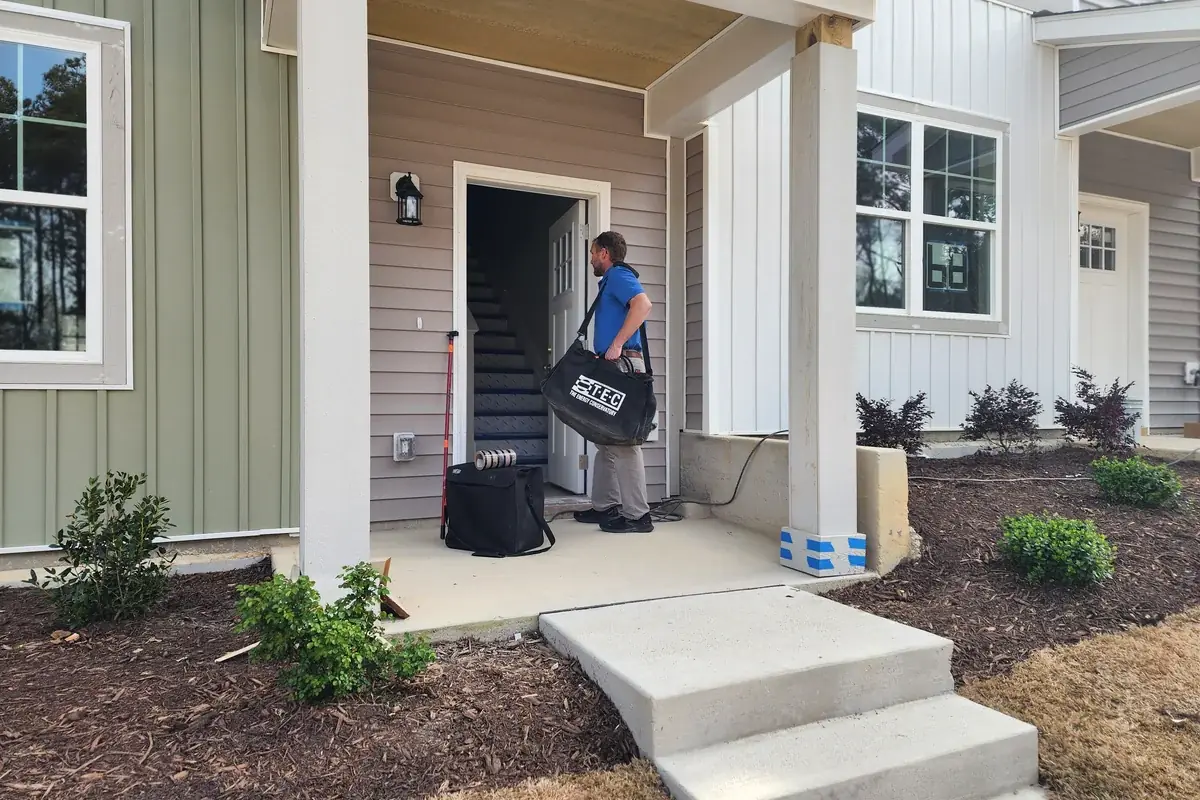
A duct blaster test measures how much conditioned air a duct system is losing before it reaches the rooms. A calibrated fan, the Duct Blaster, connects to the return air grille with a temporary duct collar. Supply and return registers are temporarily sealed, except for the opening used to connect the test equipment, and the air handler cabinet gets closed up. The fan then pulls the duct system down to -25 Pascals and holds it there. Whatever air the fan has to keep pulling in to hold that pressure is air the ducts are leaking out somewhere between the air handler and the registers.
Duct Blaster vs. Blower Door: Different Tools, Different Questions
The name causes some confusion because it sounds like a variation on a blower door test, and the two devices do look similar. A blower door is a fan mounted in an exterior doorway that depressurizes the entire house to find leaks in the building envelope, walls, windows, the attic hatch, the rim joist. Peak Energy uses a Minneapolis Duct Blaster, the duct-testing counterpart to the more familiar Minneapolis Blower Door, both made for this kind of pressure-based diagnostic work.
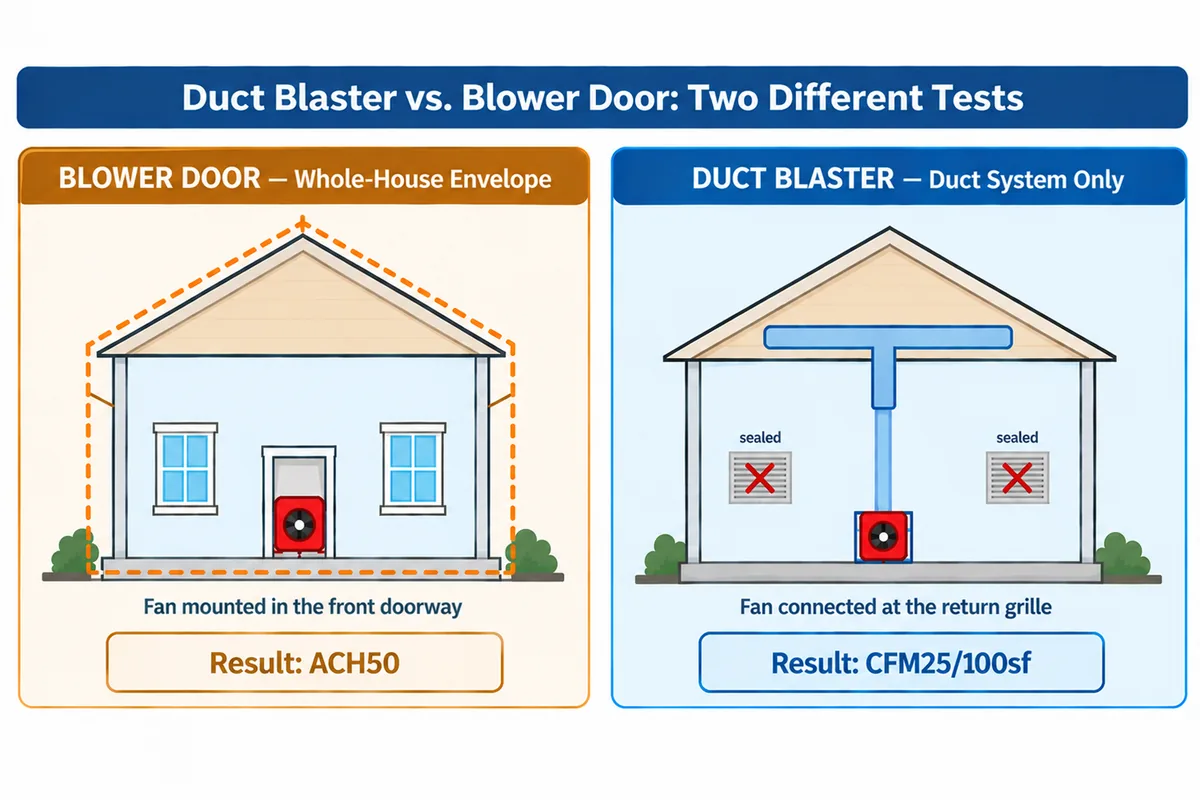
A duct blaster asks a narrower question: not “how tight is this house,” but “how tight is this duct system.” The blower door result comes back as ACH50, air changes per hour at 50 Pascals, describing the whole building envelope. The duct blaster result comes back as CFM25 per 100 square feet, describing the ducts alone. A house can have a tight envelope and leaky ducts, or the reverse. The two numbers do not predict each other.
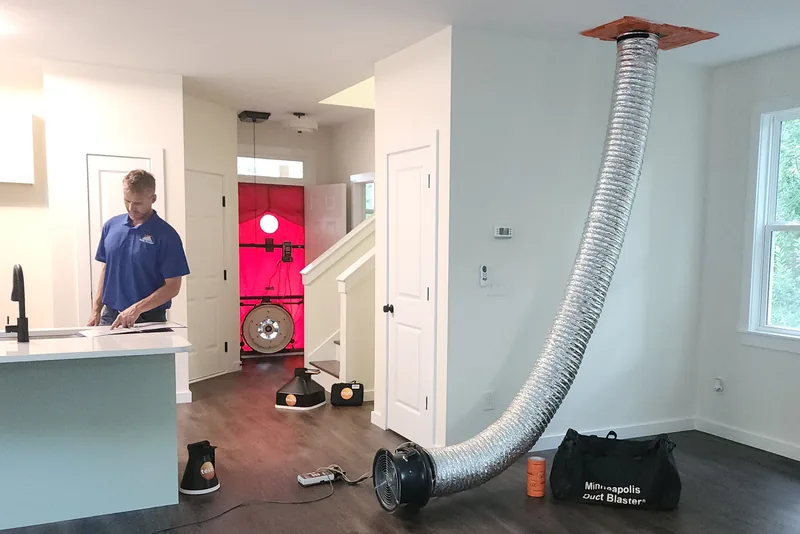
That is what it looks like when NC code requires both tests at once. A common way to measure duct leakage to outside is the balanced-pressure method, which uses a duct tester and blower door together. The house pressure is adjusted to match the duct-system pressure relative to outdoors, minimizing leakage between ducts and conditioned space so the measurement isolates leakage from ducts to outside the conditioned envelope.
Who Actually Needs a Duct Blaster Test
Two different people end up scheduling this test, for two different reasons.
Builders and HVAC contractors need it because the 2018 NC Energy Conservation Code requires a duct blaster test on newly installed residential duct systems, under Section R403.3.3. It can happen at rough-in, before insulation and drywall cover the ductwork, or as a final test on the finished home. For permitted projects that require testing, the builder or HVAC contractor should retain and provide the required compliance documentation to the local code official as part of the inspection process. The code carves out specific exceptions: ducts or duct portions that run entirely inside the home’s thermal envelope, partial duct systems installed during a replacement, renovation, or addition, and complete systems serving 750 square feet of conditioned floor area or less. It is worth confirming with duct leakage testing whether a specific system falls under one of those exceptions or needs the test.
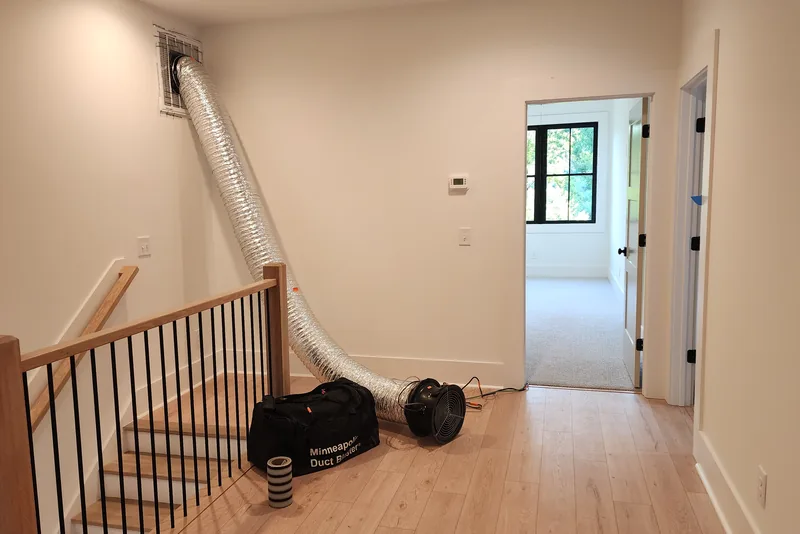
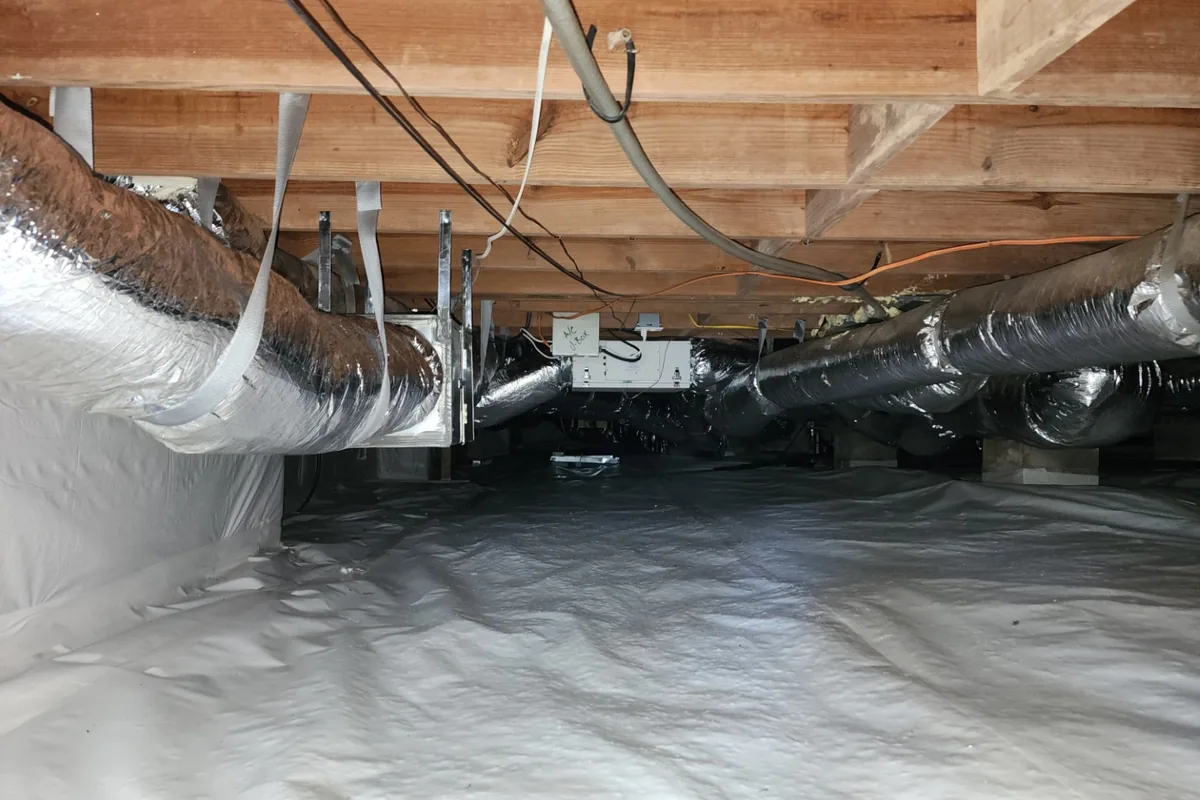
Existing-home owners are not required to test their ducts, but plenty schedule it anyway, usually as an add-on to a home energy audit. The trigger is almost always a symptom: one room that never cools evenly, a summer electric bill that jumped, or ductwork known to run through a hot attic or a vented crawl space. In older Wake County homes especially, ducts routed through unconditioned space were built to deliver air, not to be airtight, and the duct blaster is the only way to put a number on how much they are losing.
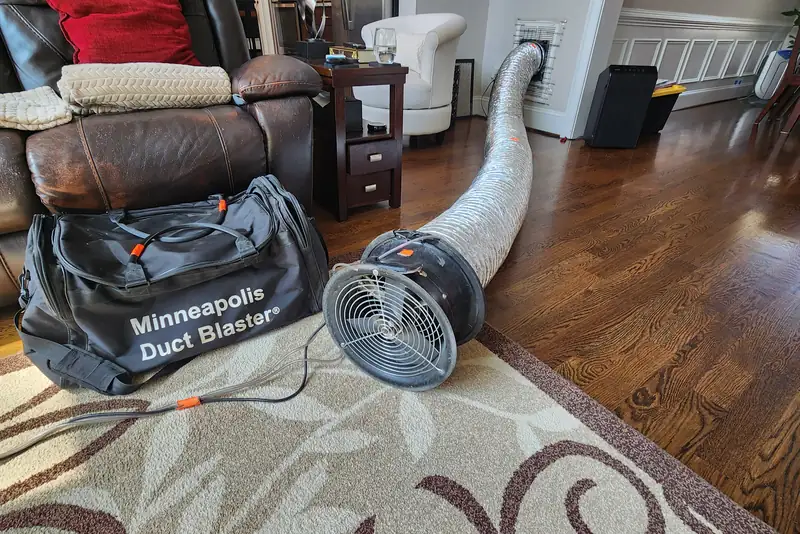
What NC Code Requires
Per the 2018 NCECC, new residential duct systems have to meet two separate limits, using the same CFM25 test method the U.S. Department of Energy’s Building America Solution Center documents for duct leakage testing nationally:
- Total duct leakage: 5.0 CFM25/100sf of conditioned floor area or less
- Duct leakage to the outside: 4.0 CFM25/100sf or less
Both thresholds are checked separately because a system can pass one and fail the other. For a full walkthrough of what these numbers mean and how to read a result, see duct leakage test results explained.
What a Duct Blaster Test Costs in the Triangle
Duct leakage testing runs an estimated $250 per HVAC system, whether it is a builder’s code-compliance test or an add-on to a homeowner’s energy audit. Testing duct leakage to the outside specifically, which needs the blower door running alongside the duct blaster, typically adds an estimated $150 to a builder’s test.
For homeowners, the $250 add-on sits on top of a basic home energy audit, which runs an estimated $475–$650+ and includes the blower door test, thermal imaging, and an inspection of the attic, crawl space, and HVAC system. Duct testing is optional on that visit, not automatically included, so it is worth asking for it directly when the symptom points toward the ducts.
What Happens If the Test Fails
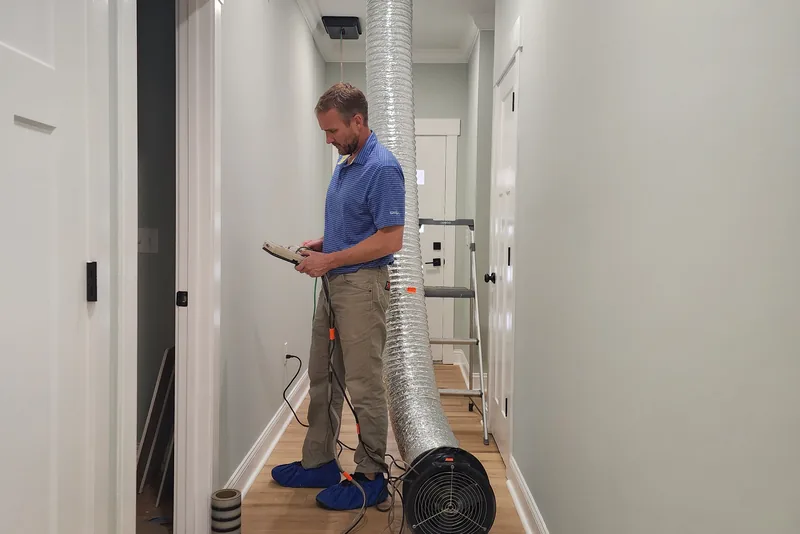
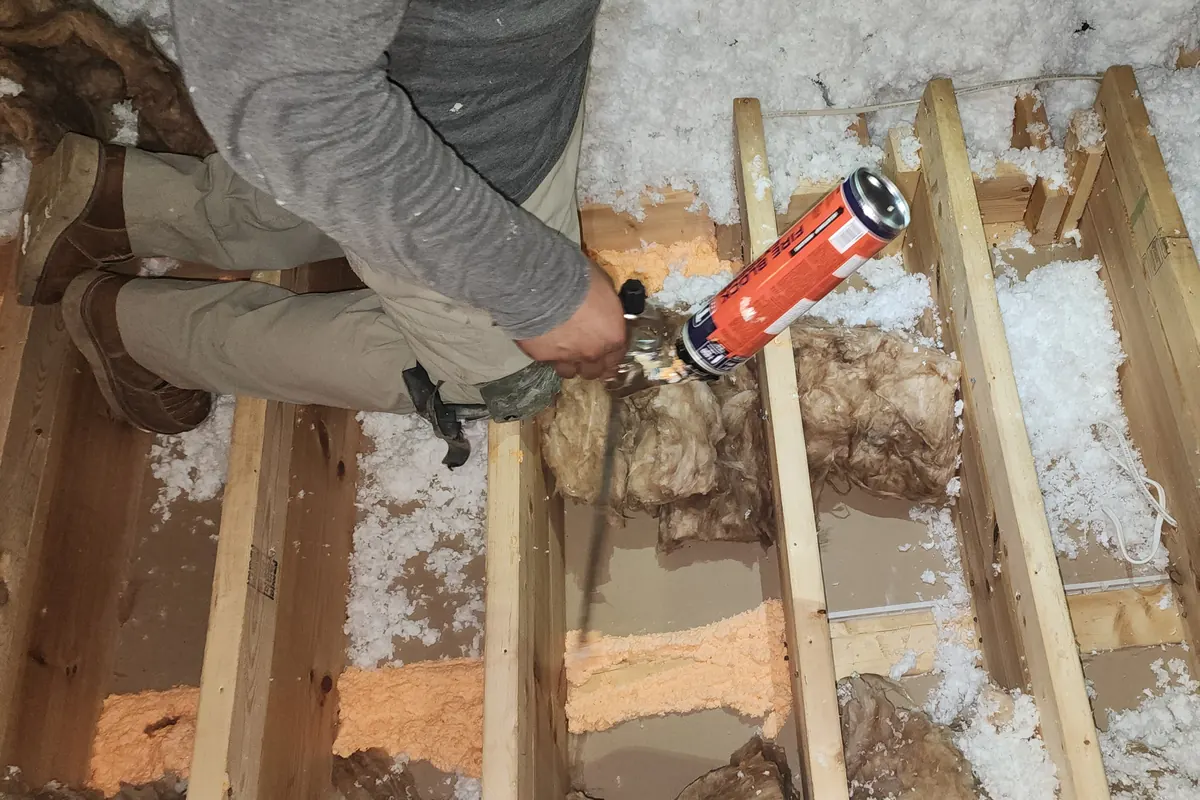
A result above either NC code threshold does not mean the ductwork is a loss. Common causes include unsealed joints and takeoffs, poorly sealed boots, cabinet leakage, disconnected or damaged flex duct, panned returns, and gaps at penetrations. The needed repair depends on where the leakage occurs and whether the area is accessible. The contractor seals or repairs those points and the system gets retested as a separate visit once the work is done. For the full list of common failure points and what a passing versus failing number looks like on new construction, see duct leakage test results explained.
Signs Your Ducts Might Be Losing Air
A few things are worth noticing before scheduling anything:
- A specific room that never matches the rest of the house, especially one at the far end of a duct run
- A summer electric bill that climbed without an obvious cause
- Visible flex duct in the attic or crawl space that looks kinked, disconnected, or crushed
- Weak airflow at a register even with the system running and the filter clean
None of these confirm duct leakage by themselves. They are reasons to measure it rather than guess. A home energy audit puts the duct blaster alongside the blower door and thermal imaging so the actual cause, ducts, envelope, or both, gets identified before any money goes toward a fix.
FAQ
What is a duct blaster test?
A duct blaster test measures how much conditioned air is leaking out of a home's duct system. A calibrated fan, often called a Duct Blaster (Peak Energy uses a Minneapolis Duct Blaster), connects to the return air grille and depressurizes the duct system to -25 Pascals while every other supply and return opening stays sealed. The leakage is measured in CFM25, then normalized to CFM25 per 100 square feet of conditioned floor area.
Is a duct blaster test the same as a blower door test?
No. A blower door test measures how much outside air leaks into the whole house through the building envelope, reported as ACH50. A duct blaster test measures how much conditioned air leaks out of the duct system specifically, reported as CFM25 per 100 square feet. A common way to measure duct leakage to the outside is the balanced-pressure method, which runs the duct tester and blower door together so the measurement isolates leakage from ducts to outside the conditioned envelope.
Do I need a duct blaster test if I am not a builder?
Not for code compliance. NC code requires a duct blaster test on newly installed residential duct systems, with exceptions for ducts entirely inside conditioned space, partial systems installed during a replacement, renovation, or addition, and complete systems serving 750 square feet of conditioned floor area or less. Existing homeowners typically add one to a home energy audit when a hot or cold room, a high summer bill, or ductwork running through a hot attic or vented crawl space suggests the ducts are losing conditioned air before it reaches the registers.
How much does a duct blaster test cost in NC?
Duct leakage testing runs an estimated $250 per HVAC system, whether it is required for new-construction code compliance or added onto a home energy audit for an existing house. Testing duct leakage to the outside specifically requires a blower door running at the same time, which typically adds an estimated $150 to a builder code-compliance test.
Get your ducts tested
Schedule duct leakage testing in the Triangle
Peak Energy, Inc. runs duct blaster testing for builders who need NC code compliance and for homeowners adding it to a home energy audit. Same-week scheduling for new construction, and duct testing can be folded into a single audit visit for existing homes.
Serving Holly Springs, Fuquay-Varina, Apex, Cary, Raleigh, Garner, and the broader Triangle region.