Table of Contents
What Crawl Space Encapsulation Actually Costs in North Carolina
Crawl space encapsulation in North Carolina costs an estimated $7,500–$15,000 for a complete job, or roughly $3–$7 per square foot. That covers a sealed vapor barrier, vent and rim joist sealing, and a dehumidifier sized for NC humidity. Smaller jobs, like a vapor barrier replacement without full encapsulation, average $1,500–$4,000.
That’s a wide range, and the reason is simple: every crawl space is different. A 900-square-foot crawl space under a 1990s ranch in Holly Springs with no standing water is a different job than a 2,000-square-foot space under a two-story in Cary with active mold and deteriorated joists.
If you’re searching for crawl space encapsulation pricing, you’ve probably noticed that most companies in the Triangle don’t publish their costs. That makes it hard to know what’s reasonable before you pick up the phone. Here’s what we can tell you from 15+ years of encapsulating crawl spaces across Wake County.
How Much Does It Cost to Encapsulate a Crawl Space by Size?
The biggest single factor is square footage. Here’s a typical estimated range by crawl space size for a full encapsulation in the Triangle, assuming average existing conditions (no standing water, no active mold, accessible clearance):
| Crawl space size | Estimated NC cost range | What’s typical at this size |
|---|---|---|
| 500 sq ft | $4,000–$7,000 | Small ranch or townhome; basic 12-mil liner, vent sealing, small dehumidifier |
| 1,000 sq ft | $6,500–$10,500 | Most common Wake County size; full liner, vent + rim joist sealing, mid-capacity dehumidifier |
| 1,500 sq ft | $8,500–$13,000 | Larger ranch or two-story footprint; heavier liner, larger dehumidifier, more seam sealing |
| 2,000 sq ft | $10,500–$15,500 | Two-story homes; often requires E100W-class dehumidifier, more drainage planning |
| 2,500 sq ft | $13,000–$18,500 | Larger custom homes; may need two dehumidifiers or zone planning |
These are estimates, not quotes. Final price depends on existing conditions (moisture, mold, structural prep), liner quality, dehumidifier sizing, and access. An assessment with measurements gets you a real number.
Crawl Space Encapsulation Cost in Holly Springs NC
Holly Springs is our home base, so we have direct cost data from hundreds of jobs here. Most Holly Springs homes were built between 2000 and 2020 — subdivisions like Sunset Ridge, Twelve Oaks, Holly Glen, Bridle Creek, and Sunset Hills make up much of the housing stock. These homes sit on Piedmont red clay (Cecil and Appling soil series) with vented crawl spaces on block foundations.
For a typical Holly Springs encapsulation project on a 1,000–1,500 sq ft crawl space with no major existing damage, the cost range is $7,500–$13,000. That sits in the lower-to-mid portion of the NC range because most Holly Springs subdivisions have similar mid-size crawl spaces with consistent access. The biggest cost variables in Holly Springs:
- Subdivision age. Homes built 2000–2010 tend to need more vapor barrier work because original barriers have deteriorated. Newer homes (2015+) often have less prep needed.
- Drainage. Older Sunset Ridge and Holly Glen lots can have grading issues that require an interior French drain or sump pump add-on ($1,500–$3,000).
- HOA access. Most Holly Springs HOAs are straightforward, but some require advance notice for exterior work.
Because we’re based in Holly Springs (ZIP 27540), scheduling is faster here than anywhere else we serve — typically within a few days. For full details on the Holly Springs market, see our Holly Springs service area page.
Crawl Space Encapsulation Cost in Raleigh NC
Raleigh has the widest range of pricing in our service area because the housing stock spans 70+ years. The cost depends heavily on which part of Raleigh and what era the home was built.
| Raleigh area | Typical home era | Estimated encapsulation cost |
|---|---|---|
| Five Points, Cameron Park, Hayes Barton | 1920s–1950s | $11,000–$15,000+ (often needs structural prep) |
| Six Forks corridor, Wildwood Green | 1970s–1990s | $8,500–$13,000 |
| North Raleigh, Northeast Raleigh | 2000s–2020s | $7,500–$11,500 |
| Eastern Raleigh near the Neuse | varies | $9,000–$15,000+ (higher water table) |
Older homes near the city center often require structural repairs to floor joists or sill plates before encapsulation can proceed. Eastern Raleigh neighborhoods along the Neuse River basin sit on lower terrain with higher seasonal water tables, which can push projects toward the higher end of the range due to more aggressive moisture management needs.
Newer subdivisions in North and Northeast Raleigh tend to have larger but more accessible crawl spaces with minimal prep work. For more on the Raleigh market and the specific neighborhoods we serve, see our Raleigh service area page.
NC Pricing vs the National Average
You’ll see national averages online ranging from $5,500 to $14,500. North Carolina pricing sits in the middle to upper part of that range for one big reason: the Piedmont’s combination of high summer humidity (often 70–90% relative humidity), heavy clay soil that holds water, and warm winters means a Triangle crawl space works harder than the same square footage in a drier climate. A successful NC encapsulation almost always includes a dedicated dehumidifier sized for our latent load — that adds $3,000–$5,000 to projects that might be quoted “liner-only” in drier states.
The good news: NC homes also benefit more from encapsulation than dry-climate homes, because the moisture problem is worse here to begin with.
What Drives the Cost
Several factors determine where your project falls within the estimated $7,500–$15,000 range. Final cost depends on the size and scope of work for your specific crawl space. If you’re still weighing whether the system itself delivers, our guide on whether crawl space encapsulation works covers what holds up and where installs fail.
Crawl Space Size
This is the biggest factor. Encapsulation is priced partly by square footage — typically $3–$7 per square foot for a complete job. A 1,000-square-foot crawl space costs less than a 2,500-square-foot one simply because there’s more ground to cover, more vapor barrier material, and more labor involved.
Existing Conditions
If your crawl space has standing water, active mold, or damaged floor joists, those problems need to be addressed before encapsulation. Mold remediation can add $500–$2,000. Structural repairs to joists or piers vary widely depending on the extent of the damage. A crawl space that’s dry and structurally sound costs less to encapsulate than one that needs prep work first.
Vapor Barrier Quality
Not all vapor barriers are the same. A basic 6-mil polyethylene sheet (the code minimum in NC) is cheaper than a reinforced 12-mil or 20-mil liner. Thicker liners resist tears, last longer, and provide better moisture control. Most quality encapsulation projects use 12-mil or heavier material on the floor and walls, sealed at every seam and penetration.
Dehumidification
A sealed crawl space needs a way to manage residual humidity. In the Piedmont climate, where summer relative humidity runs 70–90%, a crawl space dehumidifier is usually part of the project. A commercial-grade unit like an AprilAire or Santa Fe Classic averages $3,000–$5,000 installed, depending on unit capacity and drainage complexity. This is included in most full encapsulation quotes but worth asking about.
Drainage and Water Management
Some crawl spaces need a drainage system — particularly homes in low-lying areas near creeks or with high seasonal water tables. Interior French drains and sump pumps add $1,500–$4,000 to the project, depending on the layout.
Accessibility and Layout
Low-clearance crawl spaces (under 24 inches), homes with multiple crawl space sections, or spaces with complex ductwork routing all take longer to encapsulate. Difficult access means more labor hours.
What’s Included in a Typical Encapsulation
A full crawl space encapsulation from Peak Energy typically includes:
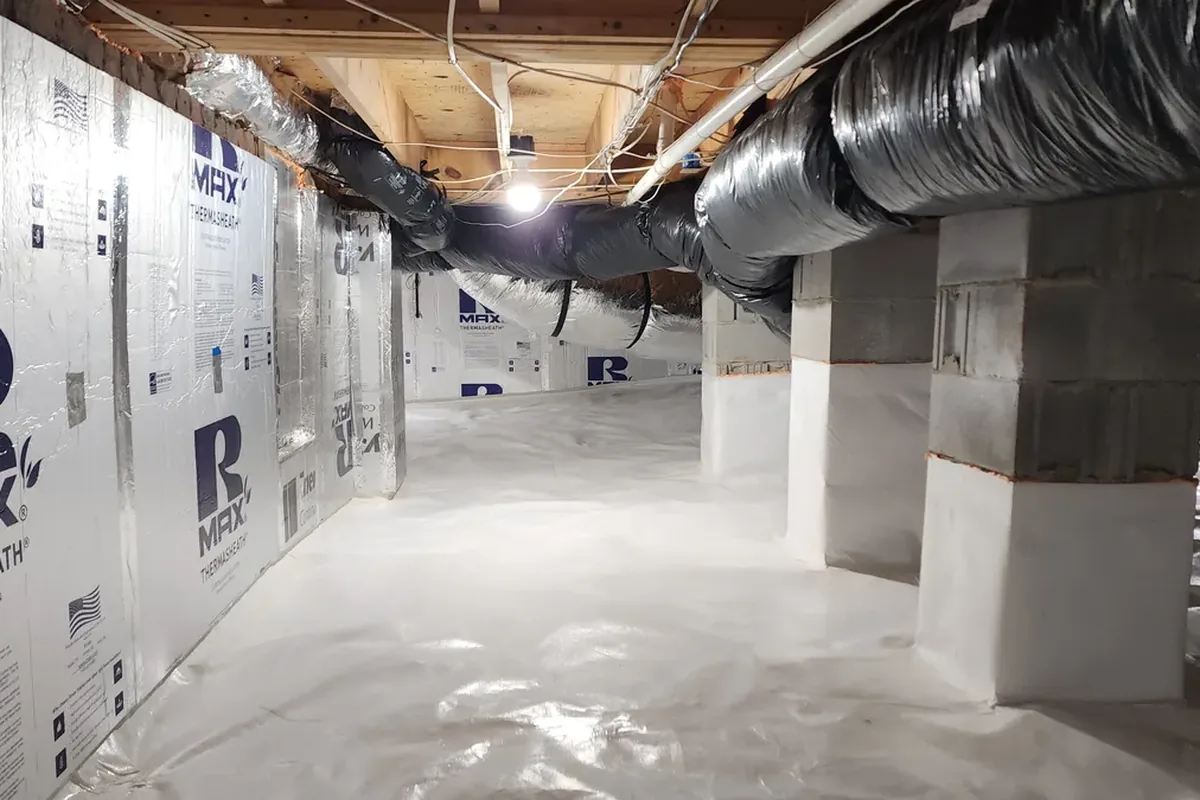
- Heavy-duty sealed liner (12-mil or thicker) covering the ground and piers, with every seam taped and sealed
- R-10 foil-faced foam board on all foundation walls. With the liner, this is one of the two biggest material costs in the job, and it is the item most often missing from a low quote
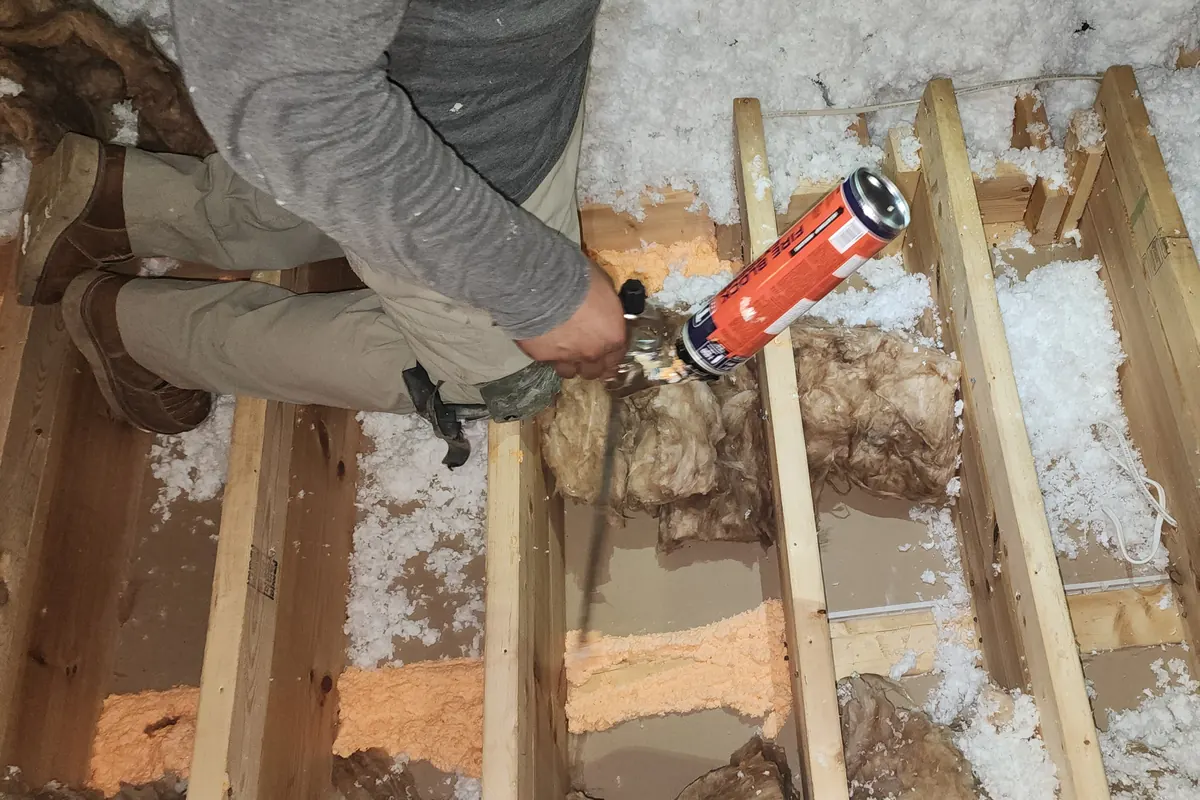
- Removal of the old floor insulation above the crawl space, with every subfloor penetration sealed with fire-rated foam
- Foundation vent sealing — closing off open vents that let humid air in
- Air sealing around rim joists, pipe penetrations, and ductwork
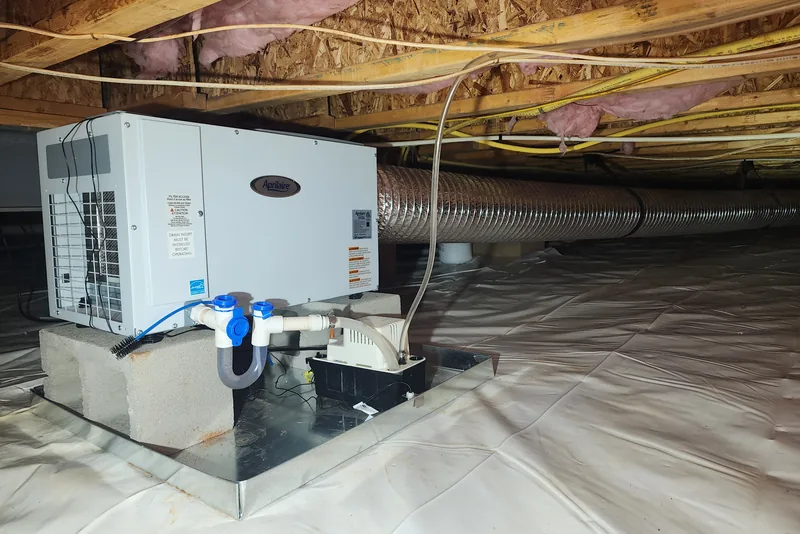
- AprilAire WiFi dehumidifier installation with accessories and the condensate drained to the outside, holding 45–55% relative humidity year-round and alerting you if it ever stops keeping up
- Diagnostic testing — we measure moisture levels, humidity, and air leakage before and after to verify the work performed as expected
Not every company includes all of these steps. Some quote a lower price but skip the dehumidifier, leave vents unsealed, or use thinner vapor barrier material. When comparing quotes, ask specifically what’s included.
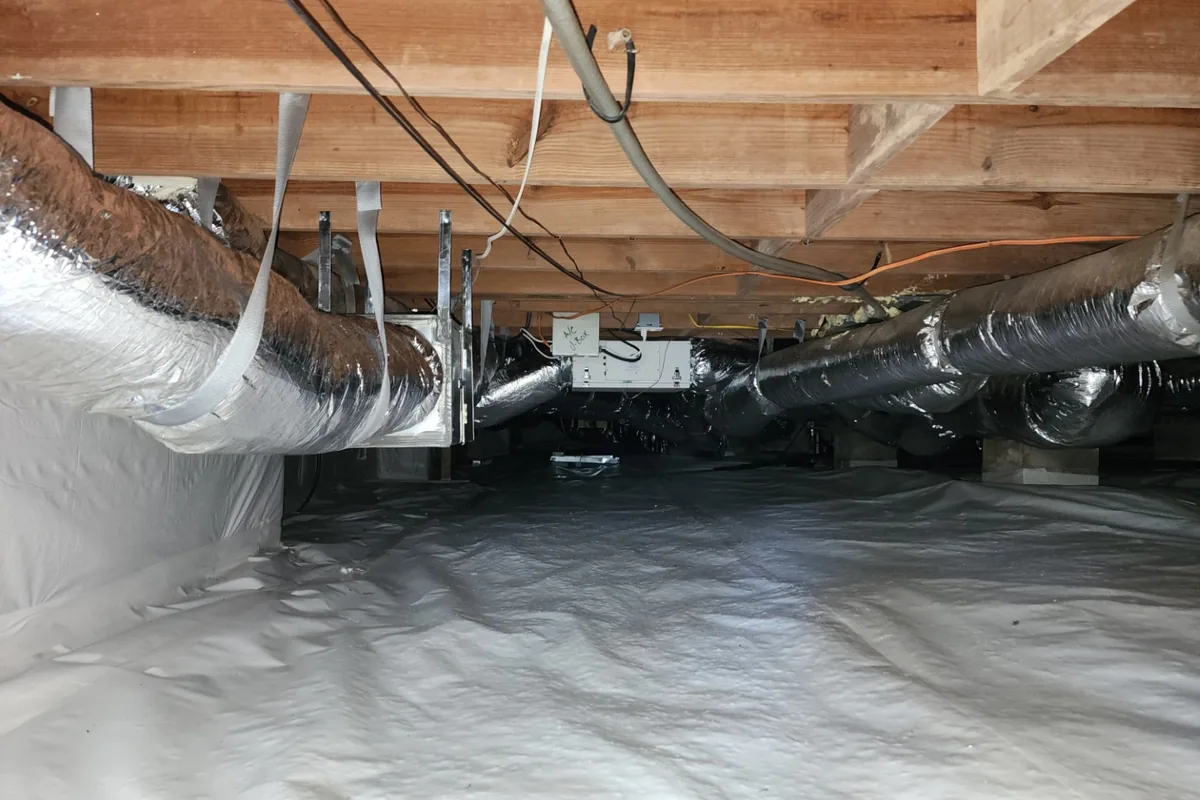
Here is what that finished work looks like in a real Wake County crawl space:
What You Actually Get at $7,500 vs $15,000
Two quotes from two different contractors can be thousands of dollars apart for what looks like the same job. The difference usually comes down to materials, dehumidification, and what’s covered. Here’s what a homeowner can reasonably expect at each end of the range:
Around $7,500 — entry-level encapsulation (smaller or simpler crawl space)
- 6-mil to 10-mil vapor barrier on floor only, mechanically fastened (not fully sealed at seams)
- Foundation vent covers installed but not foam-sealed
- Basic residential-grade dehumidifier (40–50 pints/day, ~$1,000–$1,500 unit cost)
- Limited rim joist sealing
- Standard 1-year warranty
Around $15,000 — full-system encapsulation (typical Triangle home)
- 12-mil or 20-mil reinforced liner on floor, piers, and walls, sealed at every seam
- Vents fully sealed and air-sealed at the rim joist
- Commercial-grade dehumidifier (E70W or E100W-class, $2,500–$3,500 unit cost) with hard-piped condensate
- Air sealing around all penetrations, dropped soffits, and HVAC chases
- Diagnostic verification — humidity readings before and after, walked through with you on-site
- 10–20 year warranty on materials, lifetime on workmanship
If a quote looks unusually low, ask which of these items are included. The cheaper the bid, the more likely those line items have been dropped.
Federal Tax Credit (25C): What Changed for 2026
For years, the air-sealing and insulation portion of an encapsulation project could qualify for the federal Energy Efficient Home Improvement Credit (Section 25C) — up to 30% of qualifying costs, capped at $1,200 per year. That credit expired on December 31, 2025 under the 2025 federal tax law and is no longer available for work placed in service in 2026.
If your encapsulation was completed and placed in service on or before December 31, 2025, you may still be able to claim the credit on your 2025 tax return — a licensed tax professional can confirm what applies. For 2026 projects, the credit is not available. We mention this because outdated guides still online suggest otherwise; always verify current tax rules with a CPA before counting on any credit.
Cost Comparison: Encapsulation vs. Other Crawl Space Solutions
Not every crawl space needs full encapsulation. Here’s how the options compare:
| Solution | Typical Cost | Best For | Limitations |
|---|---|---|---|
| Vapor barrier only | $1,500–$4,000 | Minor moisture, newer homes | Doesn’t seal vents or manage humidity mechanically |
| Crawl space insulation | $1,500–$3,500 | Cold floors, energy loss | Doesn’t address moisture source |
| Dehumidifier only | $3,000–$5,000 installed | Sealed spaces missing dehumidification | Needs existing seal to work properly |
| Full encapsulation | $7,500–$15,000 | Significant moisture, mold, structural risk | Higher upfront cost; scope-driven |
For many Wake County homes with vented crawl spaces on Piedmont clay, full encapsulation is the right answer. The clay holds water around the foundation, and the open vents invite humid air in — a vapor barrier alone can’t solve that combination.
Does Encapsulation Pay for Itself?
Encapsulation isn’t just a repair — it’s an upgrade that affects energy bills, air quality, and home value.
Energy savings: Sealing and conditioning the crawl space typically reduces heating and cooling costs by 10–20%. In a home spending $200–$300 per month on energy, that’s $240–$720 per year. Over 15–20 years, the savings can offset a significant portion of the project cost.
Home value: A sealed, conditioned crawl space is a selling point. Home inspectors flag moisture problems, and buyers in the Triangle market are increasingly aware of crawl space conditions. Encapsulation can prevent a deal from falling through and may increase appraised value.
Avoided repairs: Moisture damage to floor joists, subfloor sheathing, and HVAC ductwork is expensive to fix after the fact. A single joist repair can cost $300–$1,000. Encapsulation prevents these problems from developing.
If you want to track your actual savings after encapsulation, a whole-home energy monitor can show you the difference in real-time — not just an estimate, but measurable data on your Duke Energy bill.
How to Know If Your Home Needs Encapsulation
The most common signs that a crawl space needs attention:
- Musty odors in the home, especially on the first floor
- High indoor humidity even with the AC running
- Uneven floor temperatures — cold in winter, warm in summer
- Visible mold on floor joists, subfloor sheathing, or HVAC ducts
- Soft or bouncy spots in hardwood or laminate flooring
- Pest activity — insects and rodents thrive in damp crawl spaces
If you’re not sure about the condition of your crawl space, a home energy audit ($475–$650+) includes a crawl space assessment along with blower door testing, thermal imaging, and duct analysis. It’s the most thorough way to understand what your home needs.
Frequently Asked Questions
How much does it cost to encapsulate a 1,000 square foot crawl space in NC?
A 1,000 sq ft crawl space in the Triangle typically runs an estimated $6,500–$10,500 for a full encapsulation with a quality liner, vent and rim joist sealing, and a dehumidifier sized for NC humidity. Lower numbers reflect entry-level liner and a residential-grade dehumidifier; the upper end reflects a 12–20 mil reinforced liner and a commercial-grade unit like an AprilAire E70W.
Does crawl space encapsulation qualify for a federal tax credit?
Not for 2026 projects. The federal Energy Efficient Home Improvement Credit (Section 25C) — which used to cover up to 30% of qualifying air-sealing and insulation costs, capped at $1,200 per year — expired on December 31, 2025. If your encapsulation was placed in service on or before that date, you may still be able to claim it on your 2025 tax return. A licensed tax professional can confirm what applies to your situation.
How long does crawl space encapsulation last?
A properly installed encapsulation should last 15–25 years or more. The vapor barrier itself can last decades if it's a quality material (12-mil or thicker) and installed correctly. The dehumidifier has a typical lifespan of 8–12 years and may need replacement during the life of the encapsulation. Annual inspections help catch any issues early.
Is crawl space encapsulation worth it in North Carolina?
For most NC homes with vented crawl spaces, yes. The Piedmont climate — with summer humidity of 70–90% and heavy clay soil that holds water — creates conditions that vented crawl spaces can't handle. Encapsulation addresses the root cause rather than treating symptoms. The combination of energy savings, avoided structural damage, and improved air quality makes it one of the highest-return home improvements in this region.
Can I encapsulate my crawl space myself?
It's technically possible for a handy homeowner to install a vapor barrier, but a full encapsulation involves vent sealing, air sealing at the rim joist and penetrations, and dehumidifier installation with proper drainage. These steps require knowledge of building science and NC code requirements for closed crawl spaces. An improperly sealed crawl space can actually trap moisture and create worse problems than an open one.
Does crawl space encapsulation increase home value?
It can. Encapsulation removes a common home inspection concern and signals to buyers that the home has been well maintained. Real estate agents in the Triangle increasingly see encapsulation as a selling point, especially in neighborhoods with known moisture issues. The exact value impact varies, but avoiding a failed inspection or price reduction during a sale often exceeds the cost of the work.
How long does the encapsulation process take?
Most projects take 1–3 days depending on the crawl space size, existing conditions, and scope of work. A straightforward 1,000-square-foot space with no structural issues can often be completed in a day. Larger projects or those requiring mold remediation, drainage, or structural repairs may take longer.
Want to Know What Your Crawl Space Needs?
We assess your crawl space with diagnostic tools — not guesswork — and give you a specific quote. Peak Energy, Inc. is a licensed North Carolina general contractor (License 69117, Building), serving Wake County homeowners for over 15 years.
Serving Holly Springs, Raleigh, Cary, Apex & the Triangle