Table of Contents
Key takeaway: Many generic humidity tips do not account for the humid Southeast, where outdoor air often contains more moisture than the indoor air you are trying to maintain. The daily habits (shorter showers, using exhaust fans, venting the dryer outside) still help, but in many Wake County homes with a vented, damp crawl space, that crawl space can be a major ongoing moisture source. Sealing it is often a key part of getting a Triangle home to 45–55% RH.
By early August, the Piedmont is deep into its most humid stretch of the year, and Peak Energy, Inc. gets calls from homeowners who have already tried the usual advice: run the AC colder, crack a window, buy a bag of moisture-absorbing crystals. The house still feels damp. That is because most of that advice comes from places where the outdoor air is the cure, not the cause.
Why the Standard Advice Falls Short in a Triangle Summer
Search for how to lower humidity in a house and most results tell you to open windows for cross-ventilation. That works when outdoor air is actually drier than indoor air. It usually is not in Holly Springs, Fuquay-Varina, Apex, Cary, or Raleigh in August, when outdoor dew points commonly run high alongside relative humidity in the 70–90% range. Opening a window on a muggy Triangle afternoon usually adds moisture rather than removing it, because the outdoor air is carrying more moisture, not just reading higher on the RH scale.
The generic list is not wrong everywhere, just incomplete for this climate. A handful of the tips genuinely help no matter where you live. The rest need a local correction, and the biggest gap in most versions of that list is that none of them mention a source of humidity that shows up in many Triangle homes: a vented, damp crawl space underneath the house.
The Quick Fixes That Actually Help
These cost little or nothing and work in any climate, including this one:
- Run a properly vented bathroom fan during a shower and for about 20 minutes afterward, or until visible moisture has cleared
- Use a ducted range hood or kitchen exhaust fan that vents outdoors when cooking, especially when boiling or simmering, and keep lids on pots when you can
- For a conventional vented dryer, confirm that the exhaust terminates outdoors and inspect the exterior hood and duct for lint buildup. For ventless heat-pump or condenser dryers, follow the manufacturer’s drainage and maintenance instructions.
- For many conventional systems, use AUTO rather than continuous ON so moisture can drain from the coil between cooling cycles. If you have a variable-speed system or a programmed circulation mode, follow the installer’s or manufacturer’s recommendations.
- Fix plumbing leaks, overflowing fixtures, condensate-drain problems, and visibly damp areas under sinks
- During hot, humid weather, keep windows closed and rely on air conditioning or dehumidification. Open windows only when outdoor air is genuinely drier than indoor air, ideally when the outdoor dew point is lower than the indoor dew point, and when pollen, outdoor air quality, and comfort conditions allow.
None of these are the whole fix in a house with a genuine crawl space humidity problem, but skipping them makes everything downstream work harder.
Common Hidden Humidity Sources in Triangle Homes
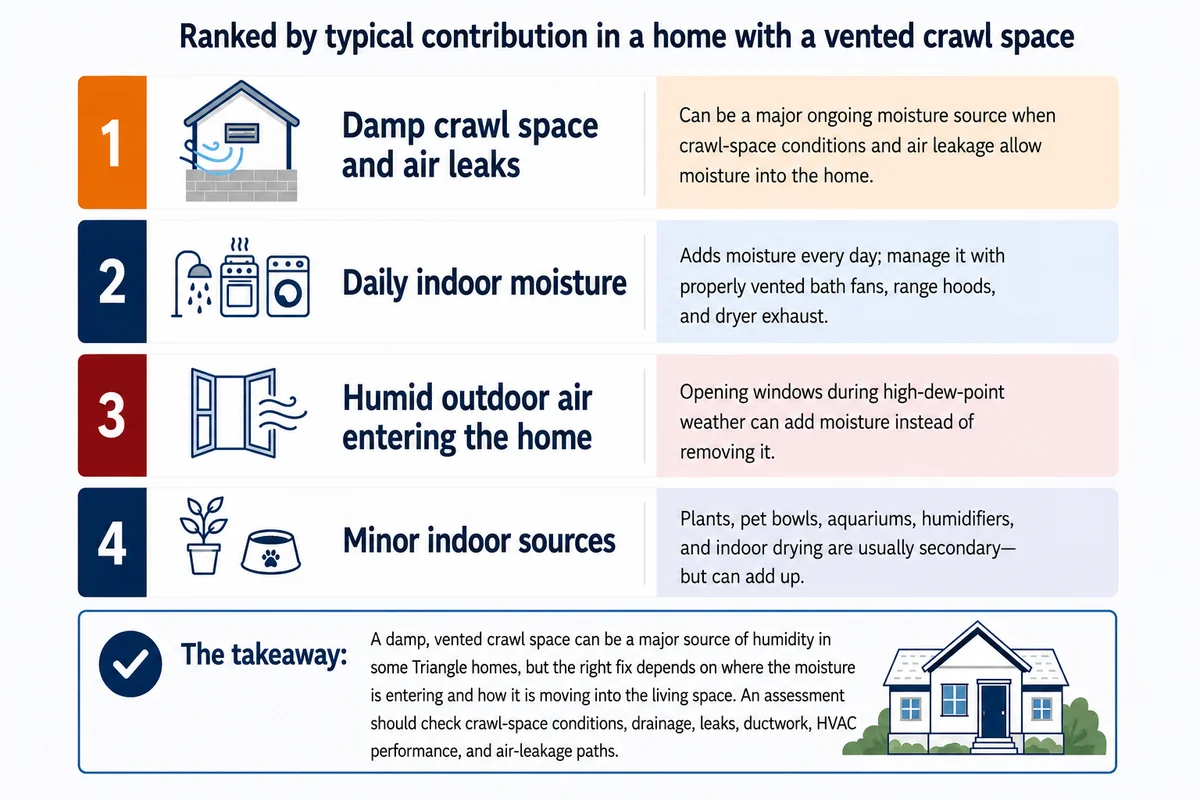
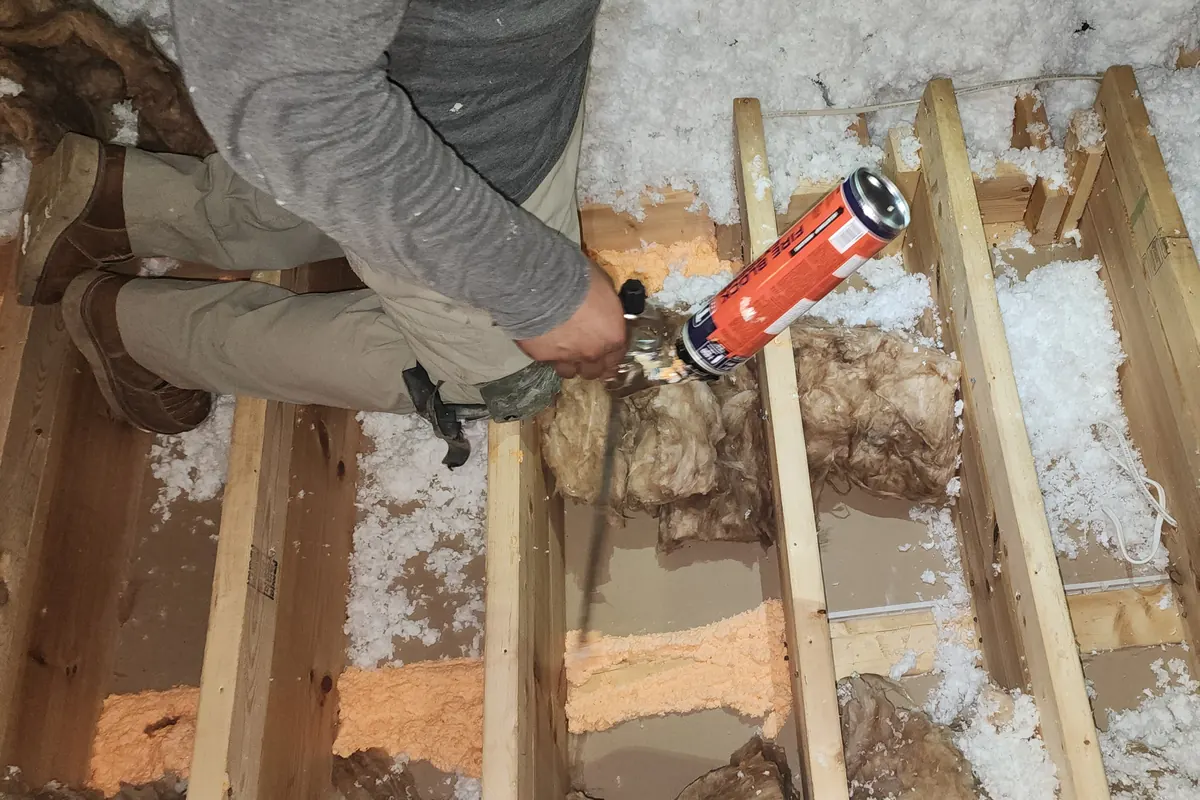
Many older Triangle homes in Holly Springs, Fuquay-Varina, Apex, Cary, and Raleigh were built over vented crawl spaces, a construction approach historically intended to manage moisture through foundation ventilation. That strategy can struggle to keep up in the Piedmont’s climate: the region’s clay soil drains slowly and holds moisture against the foundation, and the area gets 43–50 inches of rain a year. Combine that with 70–90% outdoor humidity from May through September, and a vented crawl space can stay damp for extended stretches. Air leakage through the floor system, rim joist, plumbing and wiring penetrations, and leaky ducts can allow that crawl-space air into the home above. The stack effect, where warm air rising and escaping near the roofline pulls replacement air in from below, is one driver of that movement and is typically strongest during the heating season. In summer, wind, duct leakage, and HVAC pressure imbalances can matter just as much or more.
That is the piece missing from most generic humidity advice. A dehumidifier or exhaust fan may reduce symptoms, but it may need longer runtime and higher operating cost if a damp, leaky crawl space remains an ongoing moisture source.
What Portable and Whole-House Dehumidifiers Can (and Can’t) Fix
A portable dehumidifier is a reasonable tool for a localized, mild moisture problem, like a single damp room or a laundry area. Run it, empty the tank or run the drain hose, and it earns its keep. It is not a substitute for correcting water intrusion, a drainage defect, or an open pathway from a damp crawl space below.
A whole-house dehumidifier ties into the HVAC ductwork and manages humidity across the living space, typically an estimated $3,000–$5,000 to be installed. It works well as part of a complete fix. In a home with an unaddressed crawl-space moisture load, the system may have to manage moisture entering the home over extended periods, increasing operating costs and making it harder to maintain the target humidity.
That is not a knock on the equipment. It is a sizing and sequencing problem. Dehumidifiers manage humidity. They do not stop it from entering in the first place, which is why the next step matters more than the equipment choice.
The Long-Term Fix: Sealing the Crawl Space
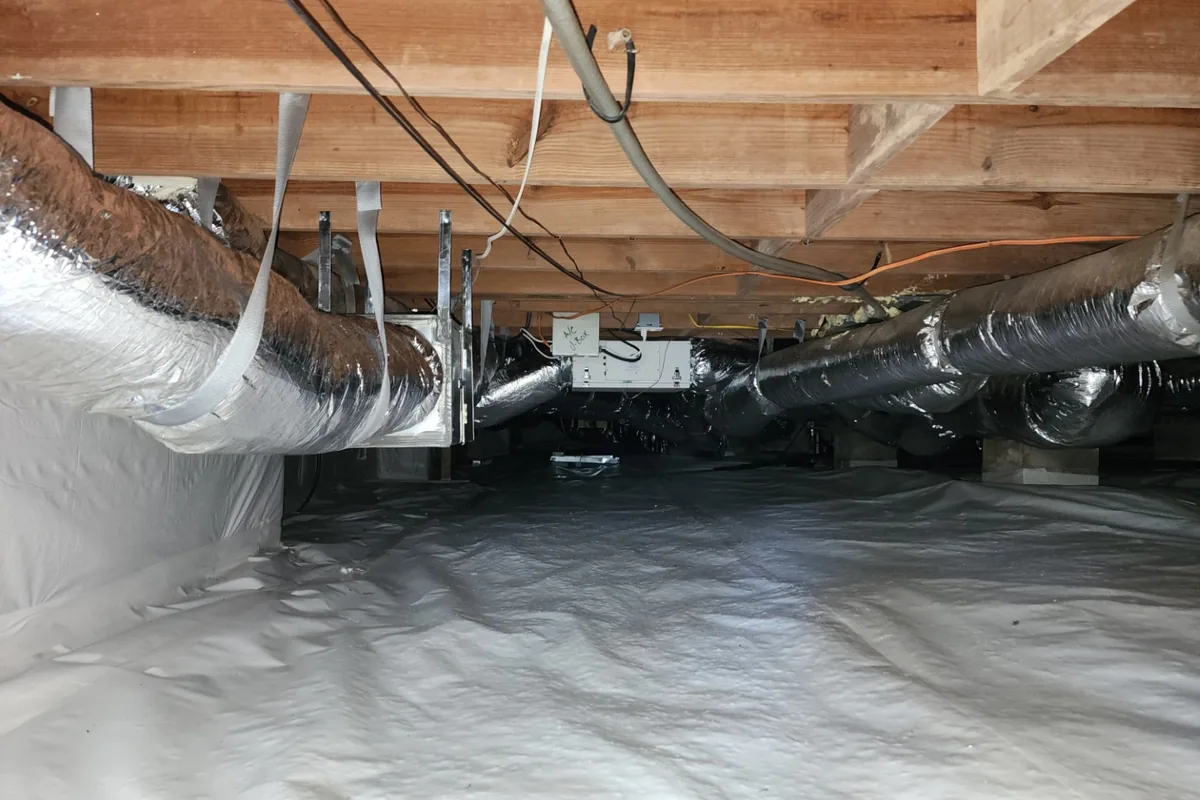
For a house with a genuinely humid crawl space, crawl space encapsulation is the fix that actually holds. It closes the foundation vents and covers the exposed soil with a durable ground vapor retarder, often called a crawl-space vapor barrier, which helps limit moisture rising from the ground and cuts off one of the main paths humid outdoor air uses to get into the house. Depending on the site, the scope may also include drainage corrections, sealed liner seams and wall transitions, air sealing, access-door improvements, insulation details, and a planned method of humidity control. A full encapsulation averages an estimated $7,500–$15,000, depending on the size of the crawl space and scope of work, including drainage, dehumidifier selection, and existing moisture conditions.
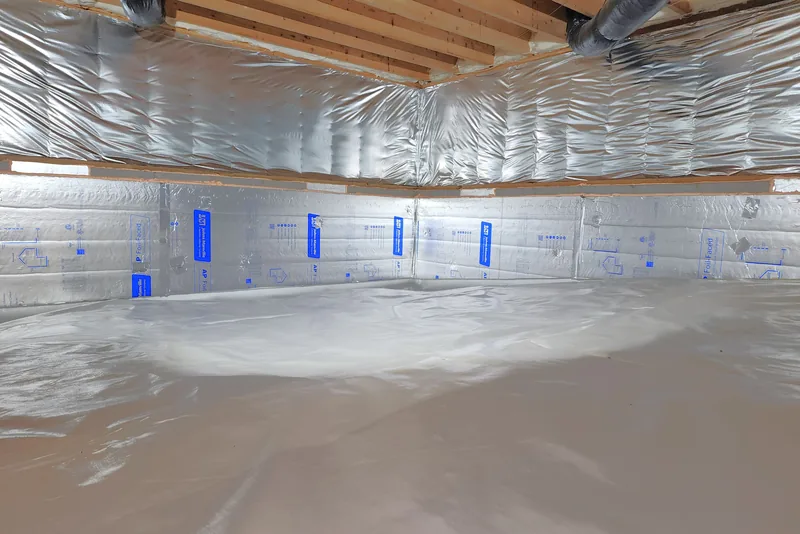
Once the crawl space is sealed, the daily habits from earlier in this post and a whole-house or portable dehumidifier stop fighting a losing battle. They start doing the job they were actually built for.
Signs Your Humidity Problem Traces Back to the Crawl Space
A single sticky afternoon does not identify the cause. These recurring signs are reasons to investigate the crawl space and other moisture pathways:
- A musty smell that gets stronger when the AC or heat kicks on
- Floors that feel cool or slightly tacky even when the thermostat reads comfortable
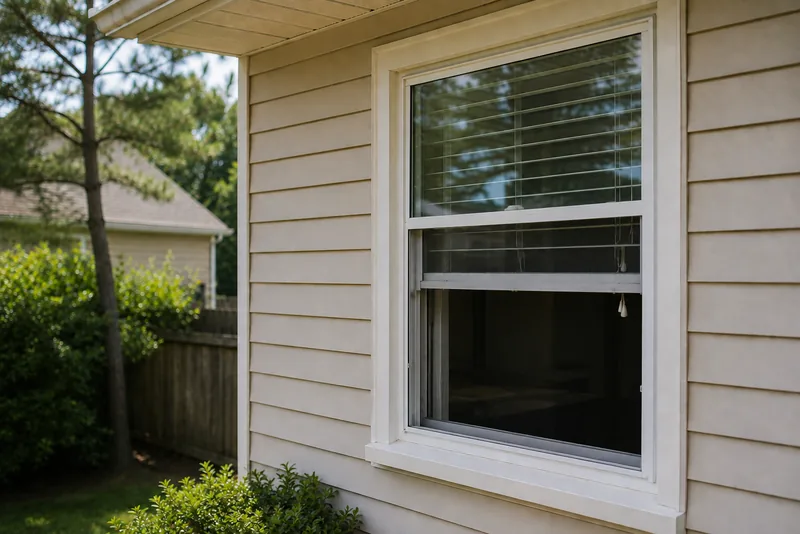
- Condensation collecting at window corners, or condensation or wet insulation on ductwork located in the crawl space or another unconditioned area
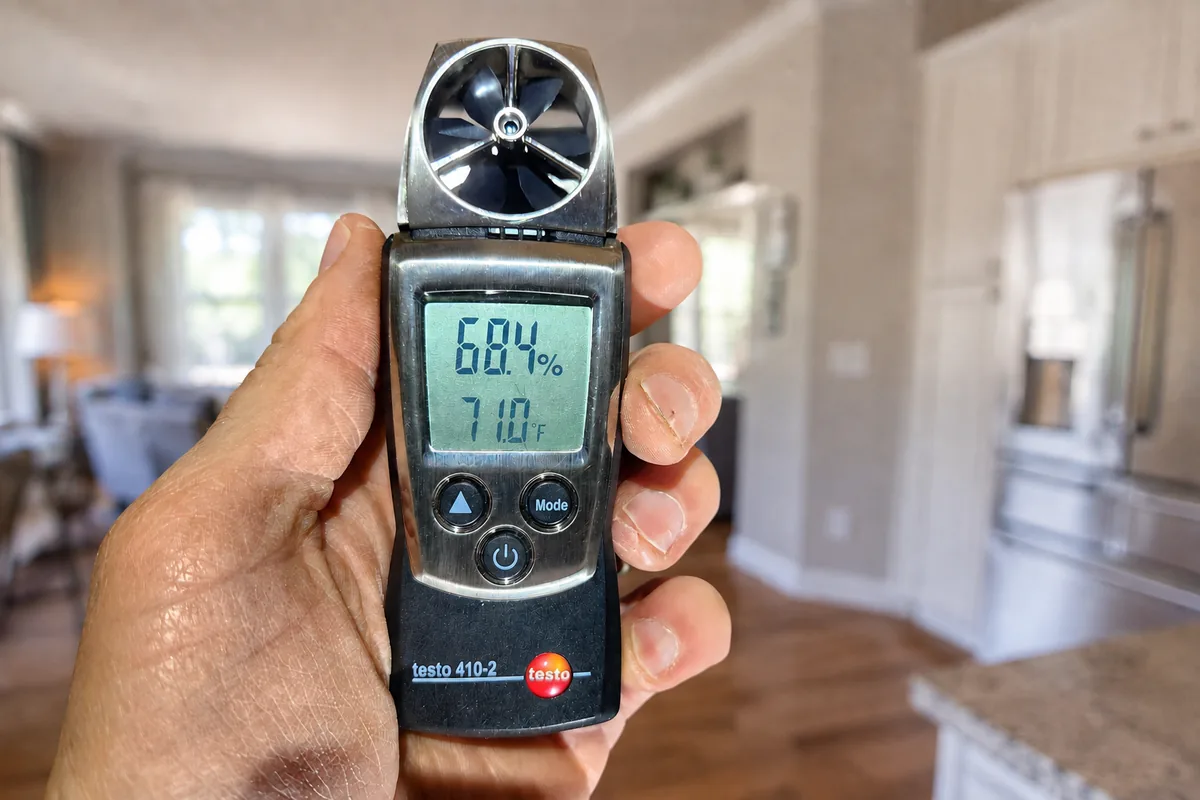
- A hygrometer reading above 55–60% RH in the living space with the AC running
For the hygrometer reading, use a reasonably accurate meter placed away from kitchens, bathrooms, supply registers, and exterior doors, and look at readings over several days rather than relying on a single measurement.
If any of these sound familiar, our guide on what a musty smell in the house means walks through how that specific symptom connects back to the crawl space, and our post on why your AC runs constantly in NC covers the related comfort problem in more depth. For the specific number a crawl space should hold once it is sealed, see our guide on ideal crawl space humidity levels.
Frequently Asked Questions
What indoor humidity level should I aim for in a NC home?
Aim for roughly 40–50% RH when practical, and avoid sustained readings at or above 60%. Sustained indoor RH near or above 60% can increase moisture and mold risk, especially on cooler surfaces. During a humid Triangle summer, many well-performing homes with a healthy building envelope and the right equipment operate in the 45–55% range.
Does opening windows help lower humidity in the summer?
Usually not in a Triangle summer, and not simply because of the relative humidity percentage. What matters is dew point: from roughly May through September, outdoor air in the Triangle often carries more moisture than a comfortable indoor target, even when the RH reading alone looks similar to an indoor number. Opening windows during those stretches usually adds moisture rather than removing it. Cross-ventilation works well when outdoor air is genuinely drier, typically during cooler, lower-dew-point stretches in spring and fall.
Will a portable or whole-house dehumidifier fix a humid house?
It depends on where the moisture is coming from. A portable unit can manage a single damp room, like a basement or laundry area, and a whole-house dehumidifier tied into the HVAC system manages the living space more broadly, typically an estimated $3,000–$5,000 installed. Neither one fixes the source if a vented crawl space is still feeding humid air into the house. When an assessment identifies a damp, vented crawl space and leakage paths into the home, addressing that crawl-space moisture source can make dehumidification more effective and less costly to operate.
How do I know if my crawl space is the source of my house's humidity?
Look for a musty smell that gets stronger when the HVAC runs, floors that feel cool or slightly tacky, condensation on windows or ductwork, and a hygrometer reading above 55–60% RH in the living space even with the AC running. Two or more of these signs are a reason to inspect the crawl space, HVAC system, ducts, drainage, and other likely moisture pathways. A crawl space assessment from Peak Energy, Inc. measures the humidity directly and helps confirm the source.
Find Out What’s Actually Driving Your Humidity
Tried the quick fixes and the house still feels damp?
Peak Energy, Inc. provides crawl space assessments across Wake County and the Triangle that go beyond a single humidity reading. We evaluate crawl space RH and conditions, visible water and drainage concerns, vapor barrier condition, and air-leakage pathways into the home, and where a broader look is warranted, we bring in home energy audits, blower door testing, duct leakage testing, and HVAC airflow testing to help pin down the actual source.
Serving Holly Springs, Fuquay-Varina, Apex, Cary, Raleigh, Garner, and the broader Triangle region.