Table of Contents
Key takeaway: A crawl space in the Triangle needs a real check twice a year: spring before the humid season, and fall before heating season. The fall check covers the humidity reading, the vapor barrier, insulation, ductwork, and any signs of water. In an encapsulated crawl space, maintenance mostly means confirming the dehumidifier is holding 45–55% RH. If a vented crawl spent the summer above 60% RH, maintenance alone will not fix it.
By the first week of September, a crawl space in Wake County has just been through the hardest four months of its year. Outdoor relative humidity ran 70–90% from May into September, the AC dripped condensate the whole time, and the clay under the house never fully dried. Crawl space maintenance is the habit of getting down there on a schedule and catching what the summer did before cold weather locks it in.
Peak Energy, Inc. is a building science and crawl space company in Holly Springs, NC, serving Wake County and the broader Triangle region. What follows is the same check our crew would run on their own houses this month, split by the kind of crawl space you have.
What a Crawl Space Check Actually Covers
A useful crawl space check takes 20–30 minutes, a flashlight, and an inexpensive hygrometer. You are looking at five things: the humidity reading, the condition of the vapor barrier, the state of the insulation, the ductwork, and any evidence of water that was not there last time.
That is the whole job. It is not glamorous, and most of the time you will find nothing. The value is in the times you find a pulled duct connection in September instead of discovering it through a February heating bill, or a slow supply-line drip before it has fed mold for six months.
Why Early Fall Is the Right Time in the Triangle
Two reasons, and they stack.
First, the evidence is fresh. Summer is when a vented crawl space takes its damage. Humid outdoor air moved through the vents for months and condensed on every surface cooler than the dew point, which in July usually means the AC ducts and the subfloor. Whatever that did, early fall is when it is easiest to see: staining is recent, damp insulation has not yet been redistributed by winter airflow, and mold that got a foothold is still small.
Second, heating season can change the direction and impact of air movement. When outdoor temperatures drop, the stack effect becomes stronger: warm indoor air rises and escapes through leaks near the top of the house, while replacement air is drawn in through lower level leaks. In homes with a vented or leaky crawl space, some of that replacement air can come from below the floor and enter the living space through gaps around plumbing, wiring, ducts, and floor penetrations. That means crawl space moisture, odors, and other contaminants can affect indoor air quality during the heating season. A fall inspection is a good time to address crawl space moisture and air leaks before cold-weather pressure differences become more pronounced. The same air movement is one reason a crawl space problem may show up first as a musty smell in the house rather than something you immediately notice below.
The Fall Crawl Space Maintenance Checklist
For a vented crawl space, work through these in order.
Take the humidity reading first. Leave a hygrometer on a joist mid-crawl for at least an hour, or better, a day. Early September readings in the 60s are typical for a vented crawl and will fall as outdoor air dries out. A reading still above 70%, or a wet sheen on ducts or the liner, means the space is holding moisture rather than shedding it. The EPA’s moisture guidance puts the mold-risk line at 60% relative humidity, and a crawl that lives above it all summer is growing something.
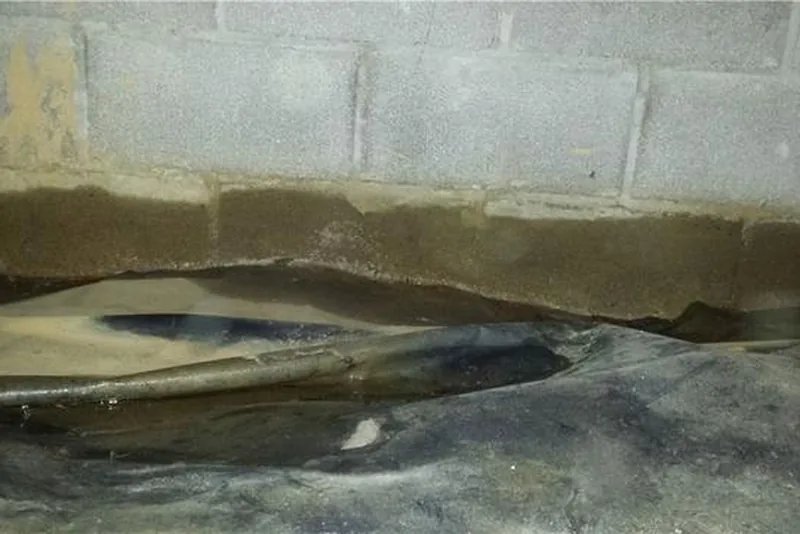
Walk the vapor barrier. Ground plastic should cover the soil with seams overlapped. Look for sections that have shifted, torn, or been pushed aside by trades working under the house. Bare Piedmont clay releases moisture into the crawl air constantly, so every exposed square foot is a small open faucet. A degraded barrier is a cheap fix relative to what it prevents. A proper crawl space vapor barrier runs an estimated $1,500–$4,000 installed.
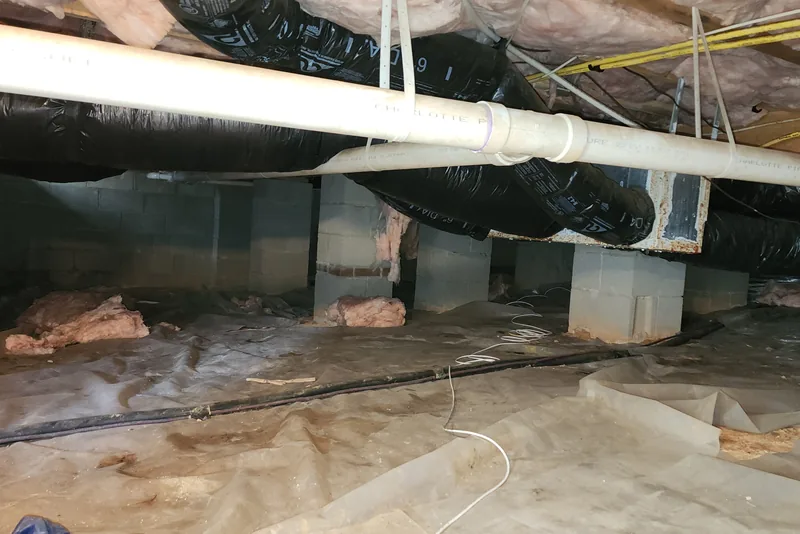
Check the insulation between the joists. Fiberglass batts that have absorbed moisture sag, darken, and eventually fall. Sagging batts are not just an insulation loss. They are a moisture gauge reading “too wet,” and stapling them back up without fixing the moisture repeats the cycle.
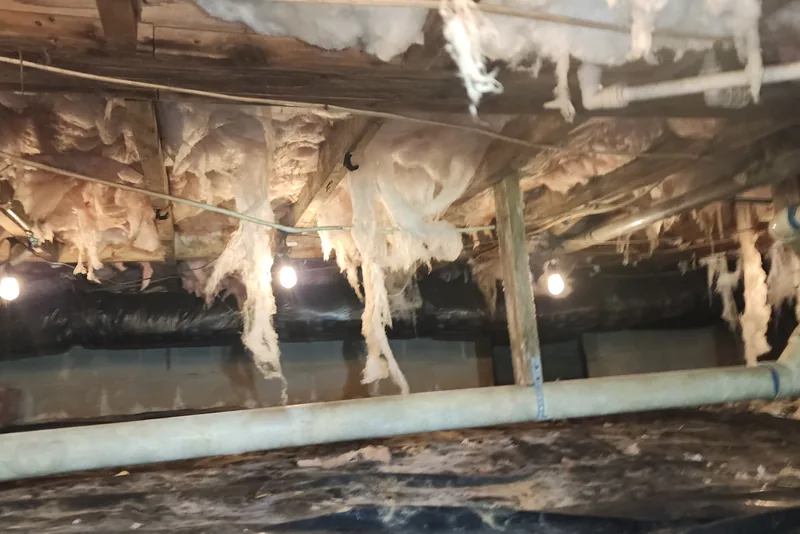
Look hard at the ductwork. Condensation stains, rusted boots, crushed flex duct, and disconnected joints all show up in crawl spaces. A supply duct leaking cold air into a humid crawl in summer is a condensation machine, and one leaking heated air all winter is money spent warming the dirt. If the ducts look suspect, that is a diagnostic question, and it is exactly what a home energy audit with duct testing answers.
Finish with water evidence. Standing water, freshly stained piers, efflorescence on block walls, or a drip line under a plumbing run. Note what you find and where. Old stains with no dampness are history. Damp ones are active problems.
Maintaining an Encapsulated Crawl Space
If your crawl space is already sealed, the maintenance list gets shorter and the stakes get lower. That is most of what you paid for. It does not drop to zero, because a sealed crawl space is a small mechanical system, and mechanical systems get checked.
Start at the dehumidifier, because it is the component doing the daily work. Pull the filter and check it, confirm the unit runs, and trace the condensate line to make sure it drains freely and downhill. A clogged drain is the most common failure we see in sealed crawls, and it announces itself as a puddle on top of an otherwise perfect liner. If the unit cycles constantly without pulling the number down, that is a service call, not a settings problem. More on how sizing and setpoints work is on the crawl space dehumidifier page.
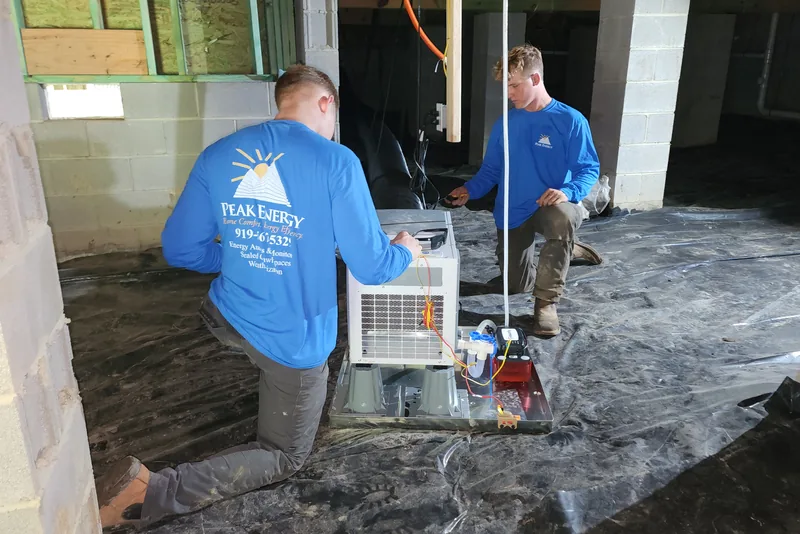
Then read the number. A sealed crawl in the Triangle should sit at 45–55% relative humidity year-round. If it held that through August, the system did its job. A number creeping into the 60s in a sealed crawl means something changed: a failed dehumidifier, a liner breach, a duct leak dumping humid air, or a new water source.
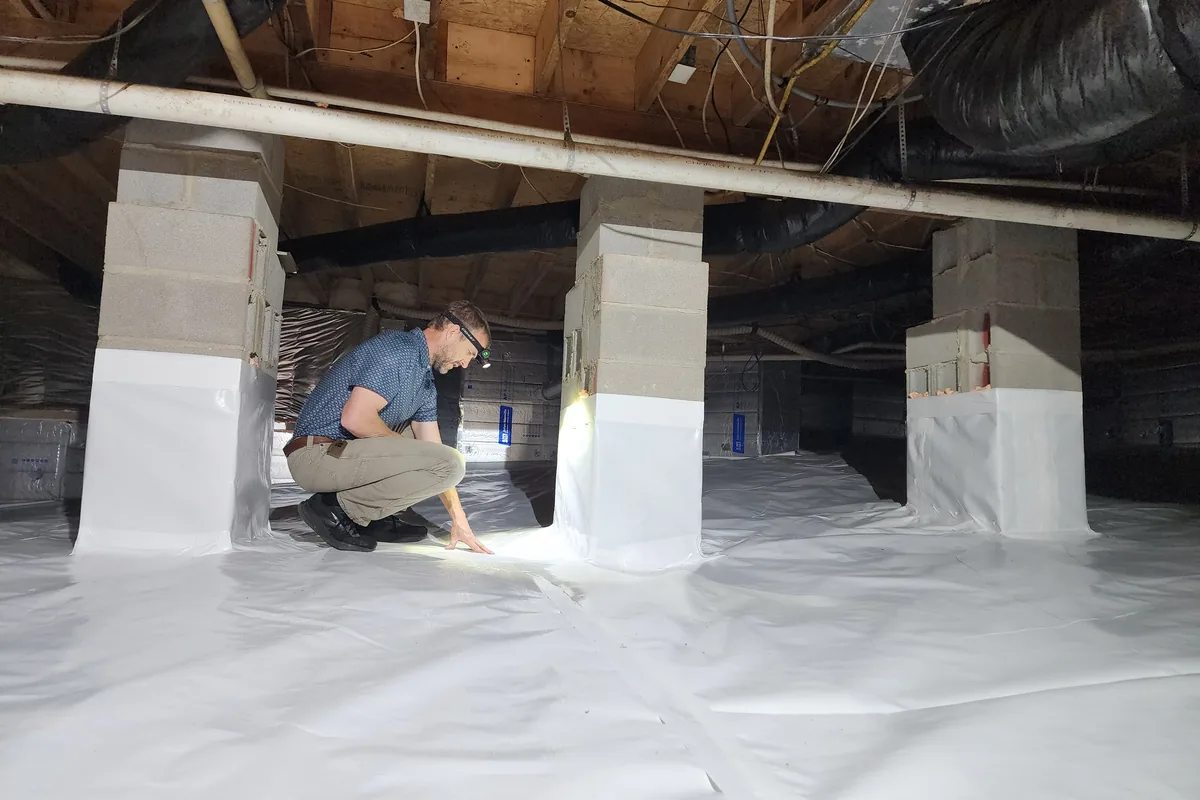
Last, scan the liner. Seams should be tight, wall attachment intact, and the surface free of cuts. Most liner damage in our experience comes from other trades, not age. If a plumber, electrician, or cable installer has been under the house since the last check, assume something got stepped on until you have looked.
When Maintenance Stops Being Enough
Maintenance keeps a healthy crawl space healthy. It cannot turn a failing one around, and a vented crawl space in the Piedmont eventually asks for more than upkeep.
The tell is repetition. If every fall check finds the same things, damp batts again, readings above 60% again, condensation trails on the ducts again, the crawl space is not suffering from neglect. It is doing exactly what a vented crawl space does in this climate, and the fix is structural, not procedural. The list of signs a crawl space needs encapsulation overlaps heavily with what a fall check turns up.
The step-up options run from a ground vapor barrier at an estimated $1,500–$4,000, to a dehumidifier installation at an estimated $3,000–$5,000, to full crawl space encapsulation, which averages an estimated $7,500–$15,000 in the Triangle depending on the size of the crawl space and scope of work. Encapsulation is the option that ends the summer moisture cycle rather than managing it.
The research behind that approach came from Advanced Energy, a Raleigh-based nonprofit energy-services and research organization. Its eastern North Carolina closed crawl space studies found that properly designed closed crawl spaces used about 15% to 18% less annual heating-and-cooling energy than comparable wall-vented crawl spaces. The research also helped make closed crawl spaces an allowable and more practical option under North Carolina’s residential code.
There is a budget logic to the timing, too. A vapor barrier installed this fall does real work all winter and does not have to be redone if you encapsulate later. It becomes part of the system.
FAQ
How often should a crawl space be checked?
Twice a year is the working standard in the Triangle: once in spring before outdoor humidity climbs, and once in fall before heating season. Add a check after any plumbing leak, HVAC work under the house, or a storm that put water against the foundation. A sealed crawl space with a monitored dehumidifier can get by with the fall visit plus a glance at the humidity reading every month or two.
Do encapsulated crawl spaces still need maintenance?
Yes, but it is light work compared to a vented crawl space. The dehumidifier needs its filter checked and its condensate drain confirmed clear, usually once or twice a year. The liner should be scanned for cuts or pulled seams, especially after anyone has been under the house. Beyond that, maintenance is mostly watching the humidity number and confirming it stays in the 45–55% range.
What should the humidity be in a crawl space?
A sealed crawl space in North Carolina should hold roughly 45–55% relative humidity year-round, with the dehumidifier setpoint usually dialed to 45–50%. A vented crawl space cannot hold a target, since it tracks outdoor air, and in a Triangle summer that often means 65–80% RH under the house. Sustained readings above 60% are the level where mold and moisture problems get started, which is why the EPA recommends keeping indoor spaces below that line.
Can I just close the foundation vents myself?
Closing the vents without the rest of the system usually makes things worse. Moisture still enters the crawl space through the soil and foundation walls, and with the vents shut it has no path out. North Carolina code treats a closed crawl space as a system that includes a sealed ground vapor retarder and a means of drying the air, not just blocked vents. If the budget is not ready for full encapsulation, a ground vapor barrier is the better interim step.
Is crawl space maintenance worth paying someone to do?
The seasonal checks are within reach of most homeowners who are willing to get under the house with a flashlight and a hygrometer. Where a professional earns the fee is diagnosis: reading whether a stain is old or active, whether insulation is failing from moisture or age, and whether the numbers point to a fix bigger than maintenance. Peak Energy, Inc. includes the crawl space in every home energy audit. The company also offers crawl space assessments across Wake County for homeowners who just want the crawl space checked.
Find Out What the Summer Did Under Your House
Want a second set of eyes on your crawl space before winter?
Peak Energy provides crawl space assessments across Wake County and the Triangle. We take the readings, walk the liner or the barrier, and tell you honestly whether anything needs doing this year.
Serving Holly Springs, Fuquay-Varina, Apex, Cary, Raleigh, Garner, and the broader Triangle region.