Table of Contents
What’s Actually Driving the August Spike
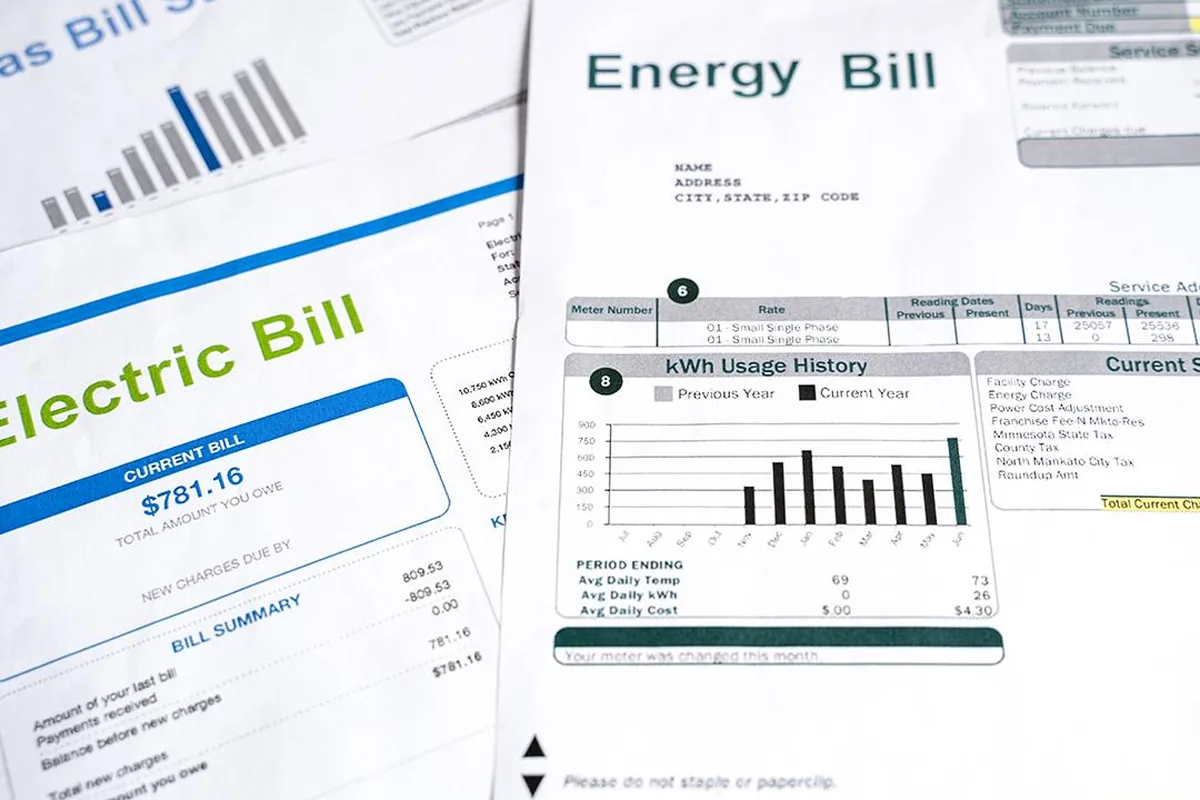
By the middle of August, most Wake County homeowners have opened at least one electric bill that made them stop and reread the number. The house hasn’t changed. Nobody added a hot tub. The thermostat is set where it always is. What changed is outside: this is the point in the Triangle summer when outdoor heat and humidity are both near their yearly peak, and the AC has been running its longest cycles of the year to keep up.
Key takeaway: A summer bill spike almost never has one single cause. It’s usually two or three of the same four issues stacking on top of each other: attic heat gain, duct leakage, crawl space humidity, and air leakage through the envelope. A home energy audit surfaces all four in a single visit, with duct leakage confirmed directly through an add-on test when it looks like a contributor. The assessment identifies and prioritizes the conditions most likely affecting comfort, humidity, and energy use, so you can make repairs based on evidence rather than guesswork.
Rising utility rates are real and worth understanding on their own. Why Is My Energy Bill So High in NC? covers that side of the equation in detail. This post is about the other half: what a home energy audit typically finds when Peak Energy, Inc. gets a call specifically because a summer bill jumped.
Four Things That Compound in Peak Summer Heat
None of these problems are new in August. They’re present in the house year-round. What changes is the load. A home that coasts through April on a leaky duct system and thin attic insulation will feel that same leak much harder once the outdoor temperature sits in the 90s for weeks and the AC is running eight or more hours a day instead of two or three.
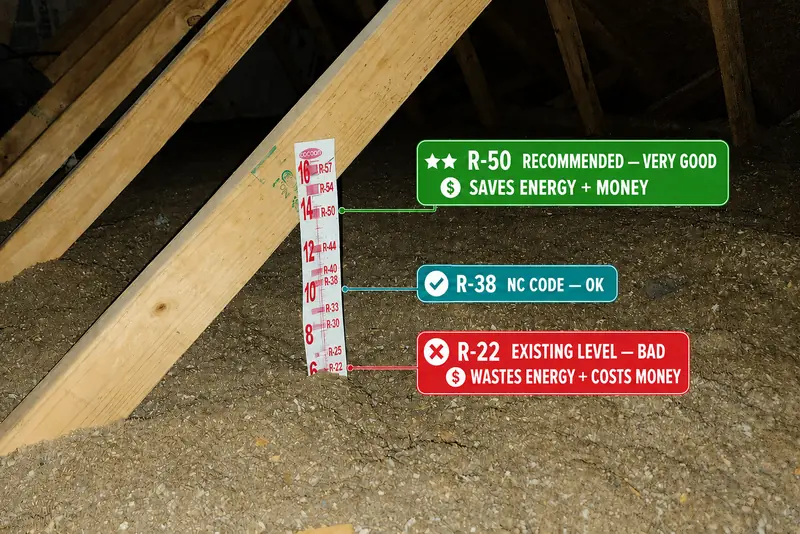
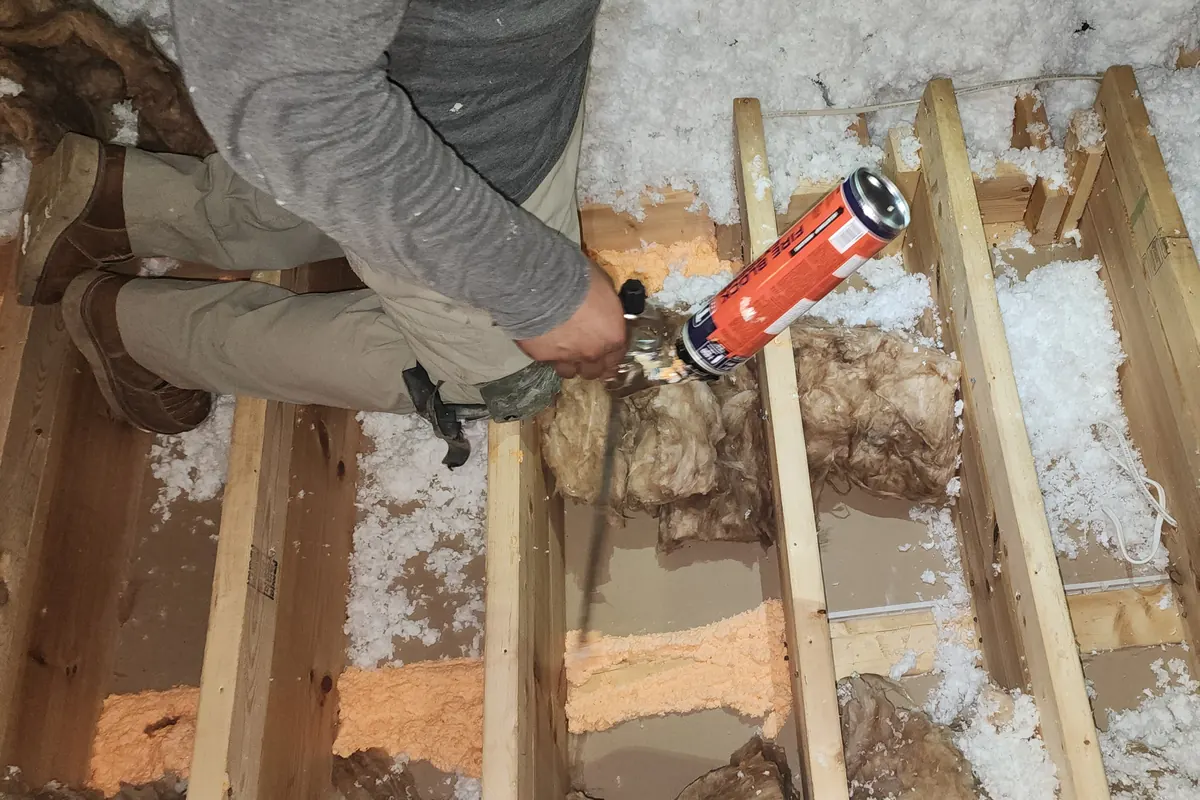
Attic heat gain. On a July or August afternoon, attic temperatures in Wake County commonly reach 120–140°F. For many existing Triangle homes, bringing attic insulation closer to R-49 is a common upgrade target, especially where insulation is thin, uneven, or poorly air-sealed. The appropriate level depends on the home, existing insulation, access, and applicable code. Where the attic is under-insulated, that heat radiates straight down through the ceiling into the rooms below.
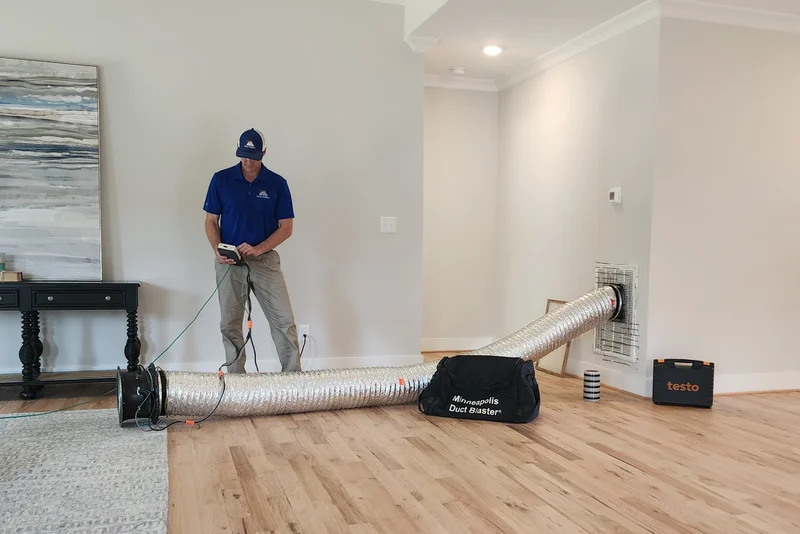
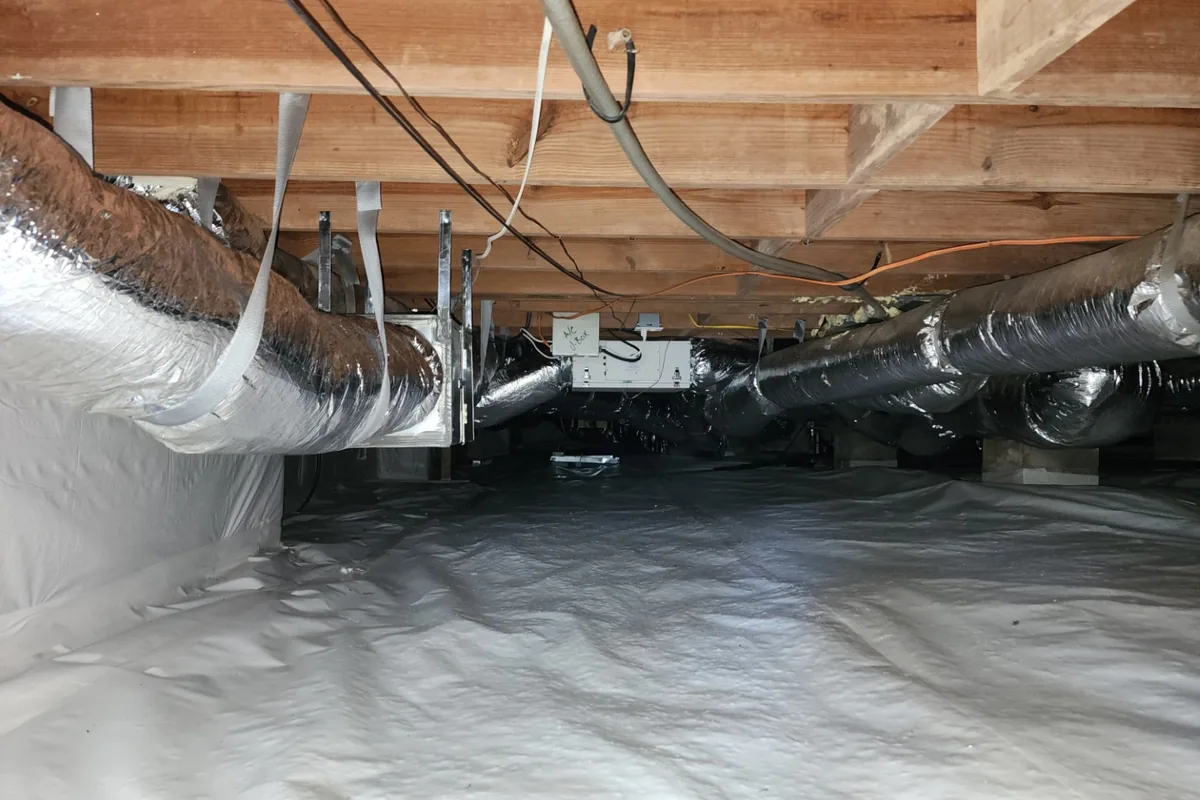
Duct leakage. North Carolina’s 2018 code caps duct leakage to outside at 4 CFM25 per 100 square feet of conditioned floor area, and total duct leakage at 5 CFM25/100sf, for new construction. Existing homes aren’t held to that threshold, but many older Triangle duct systems test well above it, at 12–20 CFM25/100sf. Results well above current new-construction thresholds can indicate a meaningful duct-sealing opportunity, particularly when ducts run through unconditioned attics or crawl spaces. A leakage test identifies the amount of leakage; the comfort and energy impact depends on the system layout and where leaks occur.
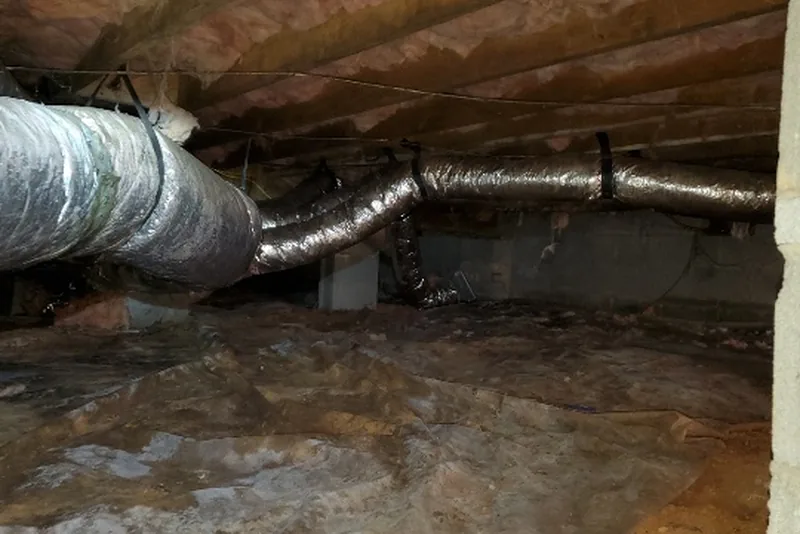
Crawl space humidity. Most homes in Holly Springs, Fuquay-Varina, and the surrounding area sit on vented crawl spaces. During the warm season, outdoor air often carries substantial moisture. Bringing that air into a cooler crawl space can raise relative humidity to the 70–90% range and create condensation or mold-risk conditions on cooler surfaces. If the floor system and ductwork are leaky, or if HVAC pressures draw crawl-space air upward, some of that moisture burden can affect the home and its cooling system, adding to the AC’s latent load, the part of the cooling job that removes humidity rather than temperature.
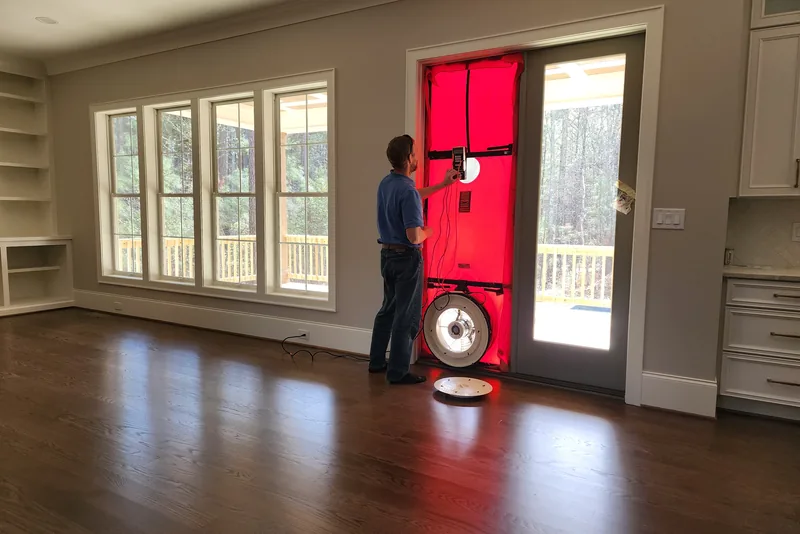
Air leakage. Some existing Triangle homes test between 6 and 12 ACH50 on a blower door. For comparison, new homes subject to the current enforced NC code pathway must meet prescribed air-leakage testing limits — 5.0 ACH50 or 0.30 CFM50 per square foot of envelope area. Existing homes are not required to meet that threshold, and the right air-sealing target depends on combustion safety, ventilation, moisture control, and the house as a system. A blower-door result helps quantify overall leakage, but the most useful next step is locating the highest-impact leakage paths and evaluating the house, HVAC system, and moisture conditions together. Air leakage allows outdoor heat and moisture to enter and conditioned air to leave whenever pressure differences drive airflow through gaps. Common leakage locations include attic hatches, recessed fixtures, top plates, plumbing and wiring penetrations, rim areas, and duct penetrations.
Is It Worth Testing Now, or Should You Wait Until Fall?
This is the question Peak Energy hears most from homeowners calling in July and August: does it make sense to schedule an audit while it’s still hot, or is it smarter to wait until the weather breaks?
Mid-to-late summer is actually a good window. The blower door test works the same in any season since it measures the physical leakiness of the building, not the weather. But thermal imaging shows the clearest heat-gain differentials while the attic is genuinely hot and the AC is running its normal cycle, and crawl space humidity readings are close to their yearly high right now, which is exactly when a vented crawl space’s share of the problem is easiest to measure and hardest to dismiss.
Waiting until October doesn’t ruin anything. It just means testing the house in conditions that no longer match the bill that prompted the call in the first place. If the AC has been running nearly nonstop and the number on the bill is the reason you’re reading this, testing while that’s still true gives the clearest data.
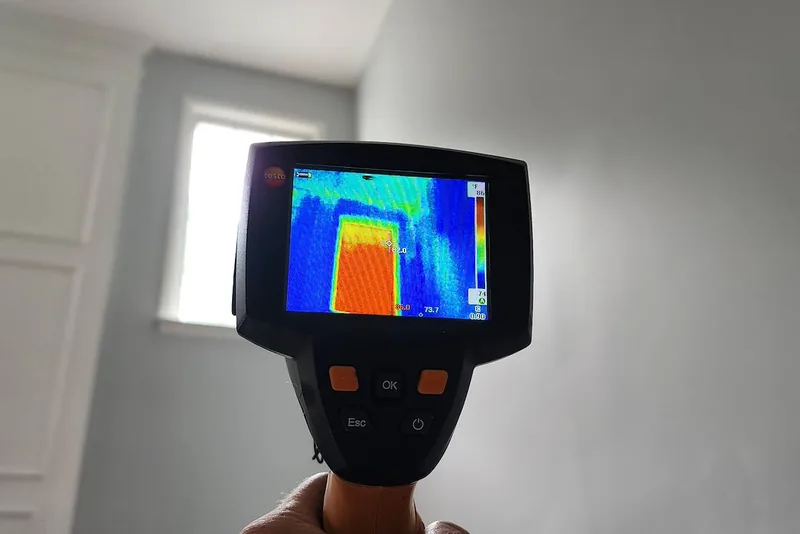
Thermal imaging during a home energy audit shows heat-gain patterns that are invisible to the eye. It’s often the fastest way to explain why one part of a house runs the AC harder than the rest, and can be especially informative during periods with a strong indoor-to-outdoor temperature difference.
What a Bill-Spike Audit Typically Finds
A home energy audit from Peak Energy, Inc. runs an estimated $475–$650+ for the Triangle area and covers a blower door test, thermal imaging, and a walk-through inspection of the attic, crawl space, and HVAC system in a single two-to-four-hour visit. Duct leakage testing is available as an add-on starting at an estimated $250 per HVAC system, and HVAC airflow testing starts at an estimated $200 per system. The technician walks through every finding with you on-site, in plain language, before leaving.
Most calls that come in specifically because of a bill spike turn up two or three of the four issues above, not just one. It is common for more than one issue to be present — for example, duct leakage in an unconditioned space alongside elevated crawl-space humidity — and each one makes the other more expensive to ignore. For a full walkthrough of what each finding looks like and how it’s measured, see What a Home Energy Audit Finds in an NC Home.
When the audit points to the attic, attic insulation topped up to R-49 typically runs an estimated $2,500–$5,500 and can reduce heating and cooling costs by an estimated 10–20%, more on the higher end for older homes starting from R-19 or below. When it points to the crawl space, crawl space encapsulation averages an estimated $7,500–$15,000 depending on size and scope of work, with realistic savings in the 10–20% range on annual heating and cooling. Duct sealing costs vary by system and access and get priced individually after the duct leakage test shows exactly how much air is escaping and where.
Signs Your Bill Spike Points to a Real Problem
Not every summer bill increase means something is wrong with the house. Rates have gone up, and a hotter-than-normal stretch of weeks will raise anyone’s bill some. These are the signs that point to something fixable in the building itself:
- The AC runs almost continuously on hot afternoons and thermostat never reaches within 2 degrees of set point temperature
- One room, usually upstairs or on the west side of the house, stays noticeably warmer than the thermostat setting no matter what
- A musty or damp smell shows up in the first few minutes after the AC kicks on
- This summer’s bill is running well above last summer’s for the same stretch of weather, with no change in how the house is used
- Indoor humidity stays above 55% and the house feels uncomfortable even at the thermostat setting
If two or more of these sound familiar, a home energy audit will tell you which of the four causes above is actually driving it, in your specific house, before you spend money guessing.
FAQ
Why did my electric bill jump this summer in NC?
In most cases nothing changed inside the house. What changed is outside: peak heat and peak humidity push the AC into its longest runtimes of the year, and any existing problem in the attic, ducts, or crawl space gets punished hardest during those weeks. Rate increases play a role too, but a home energy audit is the only way to find out how much of your specific spike is the utility and how much is the house.
Should I get a home energy audit now or wait until fall?
Mid-to-late summer is actually one of the better times to test. The blower door test works the same in any season, but thermal imaging shows the clearest heat-gain differentials while the attic is hot and the AC is running, and crawl space humidity readings are at or near their yearly peak, which is exactly when a vented crawl space's contribution to the problem is easiest to measure. Waiting until fall does not hurt anything, but it means testing the house in conditions that no longer match the bill that prompted the call.
What does a home energy audit find when a summer bill spikes?
Most bill-spike calls turn up two or three of the same four issues: attic heat gain from thin or gapped insulation, duct leakage that loses conditioned air before it reaches the room, a vented crawl space adding humidity the AC has to remove, and air leakage through the building envelope that pulls in hot, humid replacement air as conditioned air escapes. The audit includes blower-door testing, thermal imaging, and an inspection of the attic, crawl space, and accessible HVAC conditions. If duct leakage is a likely contributor, a duct-leakage test can be added to measure it directly.
Find out what’s driving your bill
Find out why your summer bill jumped
Peak Energy, Inc. performs home energy audits across Wake County and the Triangle. The audit covers blower door testing, thermal imaging, and an inspection of the attic, crawl space, and HVAC system, with an on-site walkthrough of the findings before the technician leaves.
Serving Holly Springs, Fuquay-Varina, Apex, Cary, Raleigh, Garner, and the broader Triangle region.